U.S. Supreme Court Hears Landmark Case: Can Police Use Cell Phone Location Data to Identify Suspects First?
A 2019 armed robbery near Richmond, Virginia, is bringing the so-called “geofence warrant” before the U.S. Supreme Court. This case could reshape how law enforcement utilizes massive location data held by tech platforms to identify suspects. Traditional investigative methods stalled after reviewing surveillance footage and interviewing witnesses, leading a detective to request a geofence warrant from Google.
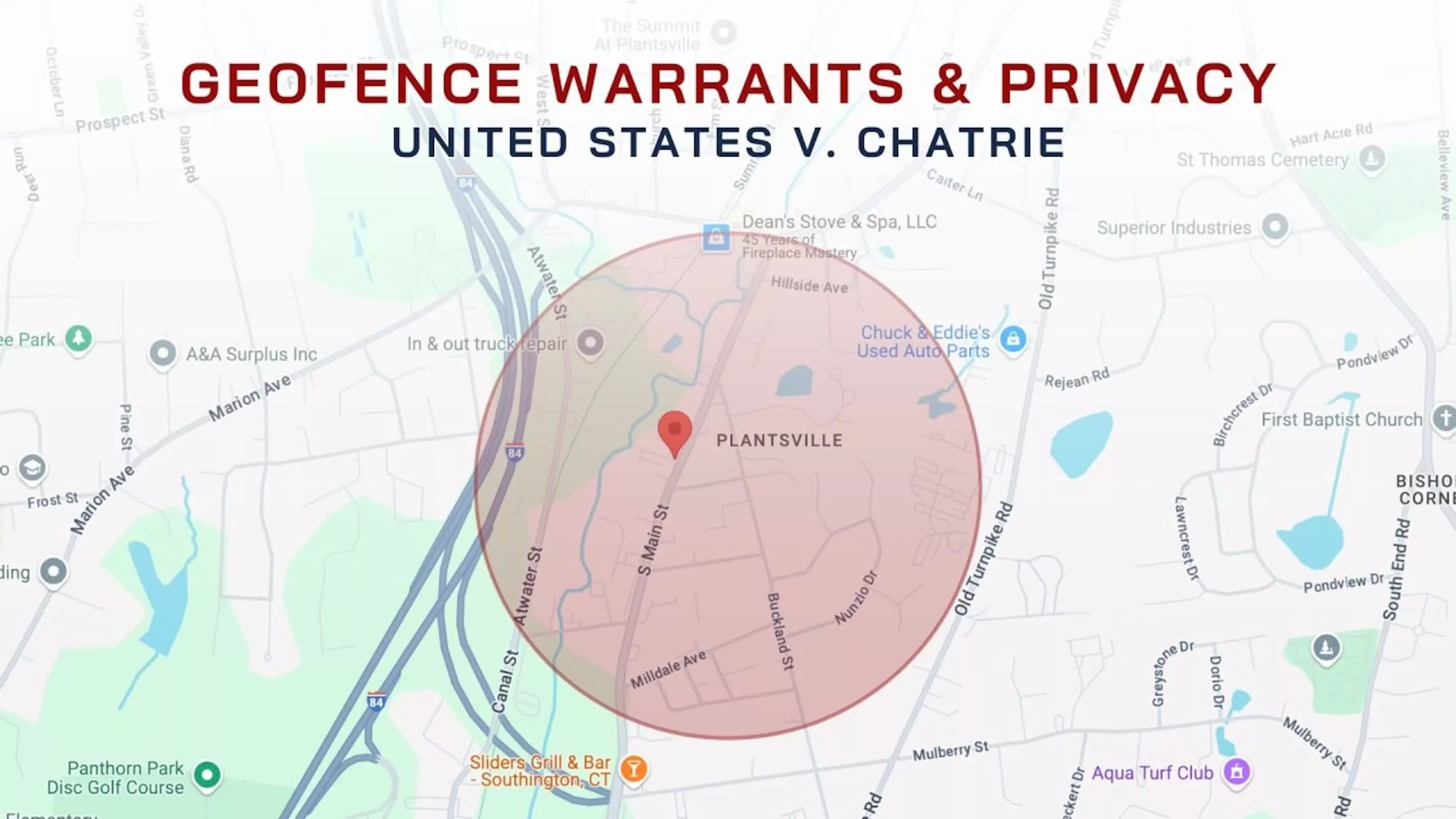
Following this data trail, police eventually identified 31-year-old Okello T. Chatrie and used his Google “Location History” to map out his complete movements, which became key evidence in the conviction.
The current focus of the Supreme Court debate isn’t whether police can use this type of data—in Chatrie’s case, the government did obtain a search warrant—but whether this search method, based on geofencing, which first defines an area and then filters devices, complies with the Fourth Amendment’s requirements for “reasonable search” and “specificity.” Today, with cell phones constantly sending location data to services like Google Maps, the amount of information accessed by these searches far exceeds the “single suspect record” under traditional concepts.
Chatrie’s attorney, Adam G. Unikowsky, argued in written opinions and court debates that geofence warrants are essentially similar to “general warrants” that the Fourth Amendment sought to prohibit, as they allow the government to “search broadly first, then develop suspects afterward.” He emphasized that personal location history is private data stored in password-protected accounts, and users sharing this information with Google does not equate to consenting to share it with law enforcement.
During the hearing, questioning from multiple justices broke with traditional ideological divides. Neil Gorsuch and Sonia Sotomayor questioned government attorneys: if the legal logic used to defend geofence warrants could also open the door to mass access to cloud emails, photos, or documents. Samuel Alito and Brett Kavanaugh were more concerned with the impact of the ruling on police investigative practices, with Kavanaugh asking the defense to explain why the detective’s steps on the Google platform were considered “bad policing,” and instead believing this operation was “commendable.”
The Department of Justice, represented by an attorney from the Office of the Attorney General, argued that Chatrie voluntarily shared location data with Google, just as the public shares financial records with banks or call records with phone companies. They also pointed out that surveillance footage showed Chatrie carrying and using his own cell phone during the robbery, which was part of his voluntary actions.
Chief Justice John Roberts expressed a degree of resonance with both sides during questioning. In a clash with the defense attorney, he stated that users could simply avoid the risk by turning off tracking—"If you don't want the government to have your location records, just turn it off, what's the problem?" But he then questioned the government side: if police could use this mechanism to identify everyone who visited a specific church or political organization at a certain time, would it become a systemic threat to civil liberties?
Technically, this case relies on Google’s previously used “Location History” architecture. In this design, if a user chooses to enable it, the service collects coordinates approximately every two minutes, storing long-term trajectories in the cloud, making geofence warrants possible: police first draw a virtual boundary and time interval on a map, and Google retrieves data from the database, initially providing anonymous device numbers, then gradually disclosing more specific device information through multiple rounds of “shrinking the circle.”
Lower courts have disagreed on this search method. In Chatrie’s initial trial, a federal judge ruled that the geofence warrant violated the Fourth Amendment’s requirements for reasonable suspicion and specificity, but allowed the evidence to be used at trial based on the “good faith exception,” reasoning that the officer involved reasonably relied on existing legal frameworks. Subsequently, a panel of the Fourth Circuit Court of Appeals upheld the search results for different reasons, finding that Chatrie did not have a “reasonable expectation of privacy” regarding the two hours of location data he shared with Google, and a full court review resulted in a 7-7 deadlock, sustaining his conviction.
The Supreme Court last explicitly reviewed mobile phone location data in the 2018 case of “Carpenter v. United States.” At that time, the Court ruled that police generally need a search warrant to obtain historical cell site location records, and released an important signal: the fact that data is held by a third-party company alone is not enough to deprive it of constitutional protection. The Court has since set stricter limits on police use of GPS tracking without a warrant, and searches of personal cell phones.
During Monday’s oral arguments, several justices suggested that accessing location history using geofencing should likely be classified on the side of “warrant-required searches” as defined in the Carpenter ruling, and that the Court has a responsibility to clarify the scope and boundaries that such search warrants must adhere to. At the same time, the technological environment surrounding geofence data is rapidly evolving: Google stated that it stopped responding to geofence warrants last year, as it adjusted its storage model, migrating location records from centralized servers back to user devices, claiming it no longer holds the type of aggregated location database that could be “swept up” in one go.
However, even with Google’s withdrawal, law enforcement has not abandoned similar tools, but has turned its attention to other large tech companies. Reports indicate that police have begun making similar requests to Apple, Lyft, Snapchat, Uber, Microsoft, and Yahoo, while continuing to rely on automatic license plate recognition systems and data tools driven by artificial intelligence for genealogical comparisons in major cases. Any nationwide rule regarding geofence warrants, once issued by the Supreme Court, will almost certainly spill over into other location-aware applications and cloud services, impacting the future “visibility” of citizens’ daily cell phone use in the real world.