IAEA Director General: Highly Enriched Uranium Likely Still Hidden in Isfahan Underground Tunnels
International Atomic Energy Agency (IAEA) Director General Rafael Grossi stated on Tuesday that the agency believes most of Iran's highly enriched uranium is likely still stored at its Isfahan nuclear facility. IAEA inspectors have been unable to access the location for on-site inspection since June of last year.
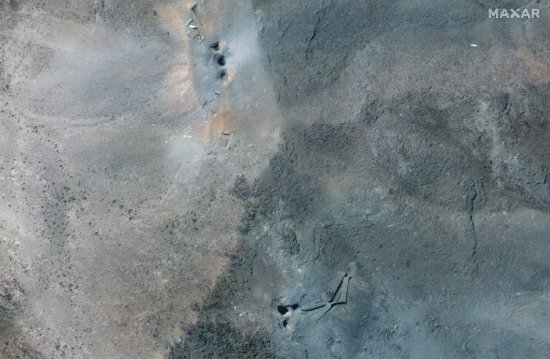
According to Grossi, this highly sensitive highly enriched uranium has a purity of up to 60%, only a step away from the 90% purity required for weapons-grade material. The IAEA estimates that Iran previously possessed approximately 440.9 kilograms of such nuclear material. Around 200 kilograms are believed to be stored deep within underground tunnels at the Isfahan facility.
This assessment is mainly based on analysis of satellite imagery prior to the outbreak of conflict in June 2025. Grossi revealed that the images showed a truck carrying 18 blue containers entering a tunnel entrance at the Isfahan Nuclear Technology Center before the conflict began. These containers are believed to be loaded with highly enriched uranium and are likely still there today. Grossi emphasized that this is only the agency’s “best estimate” based on available information, as its authenticity cannot be confirmed without inspectors being able to access the site and check the integrity of the seals on the nuclear material.
In addition to Isfahan, the IAEA also hopes to inspect nuclear facilities located in Natanz and Fordow, where some nuclear materials are also stored. Grossi stated that Iran is a signatory to the Treaty on the Non-Proliferation of Nuclear Weapons and, under the treaty, is obligated to open its nuclear facilities for IAEA inspection.
Notably, the international community is exploring various solutions regarding the final destination of this highly enriched uranium. Grossi revealed that the IAEA has discussed with Russia and other parties the possibility of transferring this highly enriched uranium out of Iran. However, he admitted that this is an extremely complex operation that would either require a broad political agreement or a large-scale military operation by the US military in hostile territory to achieve.