Microsoft's Gaming Business Continues to Decline
However, strong cloud business growth alleviates concerns about the company's bet on artificial intelligence and offsets losses in the company's consumer business revenue. Microsoft expects capital expenditures to reach $190 billion this year, a 61% increase year-over-year, with second-quarter revenue growth of 13%-15%.
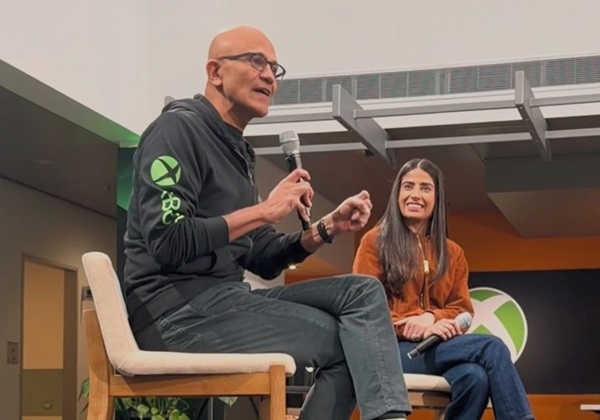
According to Microsoft's recently released first-quarter earnings report, Xbox hardware sales revenue declined by 33%, and Xbox content and services revenue declined by 5%. The company's quarterly revenue reached $82.9 billion, a year-over-year increase of 18%, with net profit of $31.8 billion. Key indicators all exceeded expectations.
Among them, cloud business revenue reached $54.5 billion, a year-over-year increase of 29%; Copilot attracted 20 million paying users, an increase of 33% compared to January, and Azure cloud computing grew by 40%, meeting expectations; quarterly capital expenditures were $31.9 billion, 8% lower than expected.
Microsoft this week revised its agreement with OpenAI, giving the latter more freedom to accept investment from Microsoft competitors, while reducing the amount of revenue it must share with Microsoft. The two sides engaged in months of tug-of-war before reaching an agreement, and it was rumored that OpenAI once considered suing to forcibly terminate the contract.
As Microsoft's competitor, Amazon's performance is even more impressive, with the company's first-quarter revenue reaching $181.5 billion, far exceeding analysts' expectations.
Among them, cloud computing business represented by AWS increased by 28% to $37.6 billion year-over-year, advertising service revenue increased by 24% to $17.2 billion, and subscription service revenue increased by 15% to $13.4 billion. In retail, e-commerce sales were $64.3 billion, physical store sales were $5.8 billion, and third-party seller service revenue was $41.6 billion.
Previously, Amazon's earnings per share were predicted to be $1.65 billion, now revised to $2.78 per share. The company expects revenue of $194 billion to $199 billion for April to June, a year-over-year increase of 16% or even 19%. The company's Prime Day membership day event extended to June in the second quarter.
Even more surprisingly, the chips designed by Amazon have become a mainstay business, with chip sales revenue of $20 billion, a three-digit increase. Meta has stated that it will purchase millions of Amazon Graviton processors.
The cost is a surge in first-quarter capital expenditures to $43.2 billion, and full-year capital expenditures will reach $200 billion, a year-over-year increase of 60%; the company's free cash flow fell to a low of $1.2 billion, while it was $25.9 billion in cash during the same period last year.
Company CEO Andy Jassy said that participants in the AI arms race are very interested in the Graviton processor, and some buyers have requested to buy all the inventory.
Amazon's investment in the film "Plan B" also achieved unprecedented box office success ($615 million). The company is heavily investing in a low Earth orbit satellite communications network (LEO), in addition to investing $11 billion to acquire satellite operator Globalstar, it has also accelerated the frequency of LEO satellite launches, and has currently deployed 270 satellites, with a long-term goal of 7,000 satellites.