Microsoft CEO Nadella Says Will Strengthen Basic Windows Experience and Improve Performance on Low-Memory Devices
Microsoft CEO Satya Nadella admitted during the latest earnings call that the company is trying to win back consumers, especially regaining the recognition of ordinary users in the Windows business. After Microsoft announced its fiscal year 2026 third-quarter results and exceeded analysts' expectations, Nadella proactively mentioned Windows multiple times during the meeting, which is uncommon for Microsoft executives communicating with the capital markets, as these occasions have historically focused more on enterprise and government customer business.
Reports indicate that Microsoft has long been more focused on enterprise and government customers, but this does not mean it has abandoned the consumer market. Nadella stated on the call that Microsoft is currently conducting "foundational work" around consumer-facing product lines such as Windows, Xbox, Bing, and Edge, with the goal of regaining user favor and improving overall usage stickiness.
According to Nadella, Microsoft's focus in the short term is not on flashy concepts, but on returning to the "basics" that core users truly care about, prioritizing product quality, and better serving core audiences. He mentioned that this approach is already reflected in the adjustment direction of Windows, including performance optimization for low-memory devices, simplifying the Windows update experience, and refocusing attention on the core functions and basic experience that are most important to users.
Nadella also disclosed that the number of monthly active Windows devices has exceeded 1.6 billion, but this figure likely includes both Windows 10 and earlier versions, and does not refer to Windows 11 alone. Regarding the separate installation scale of Windows 11, the report pointed out that Microsoft did not provide specific numbers, but Nadella emphasized that the value of Windows will continue to extend in the future to provide "non-metered intelligence" on the edge side.
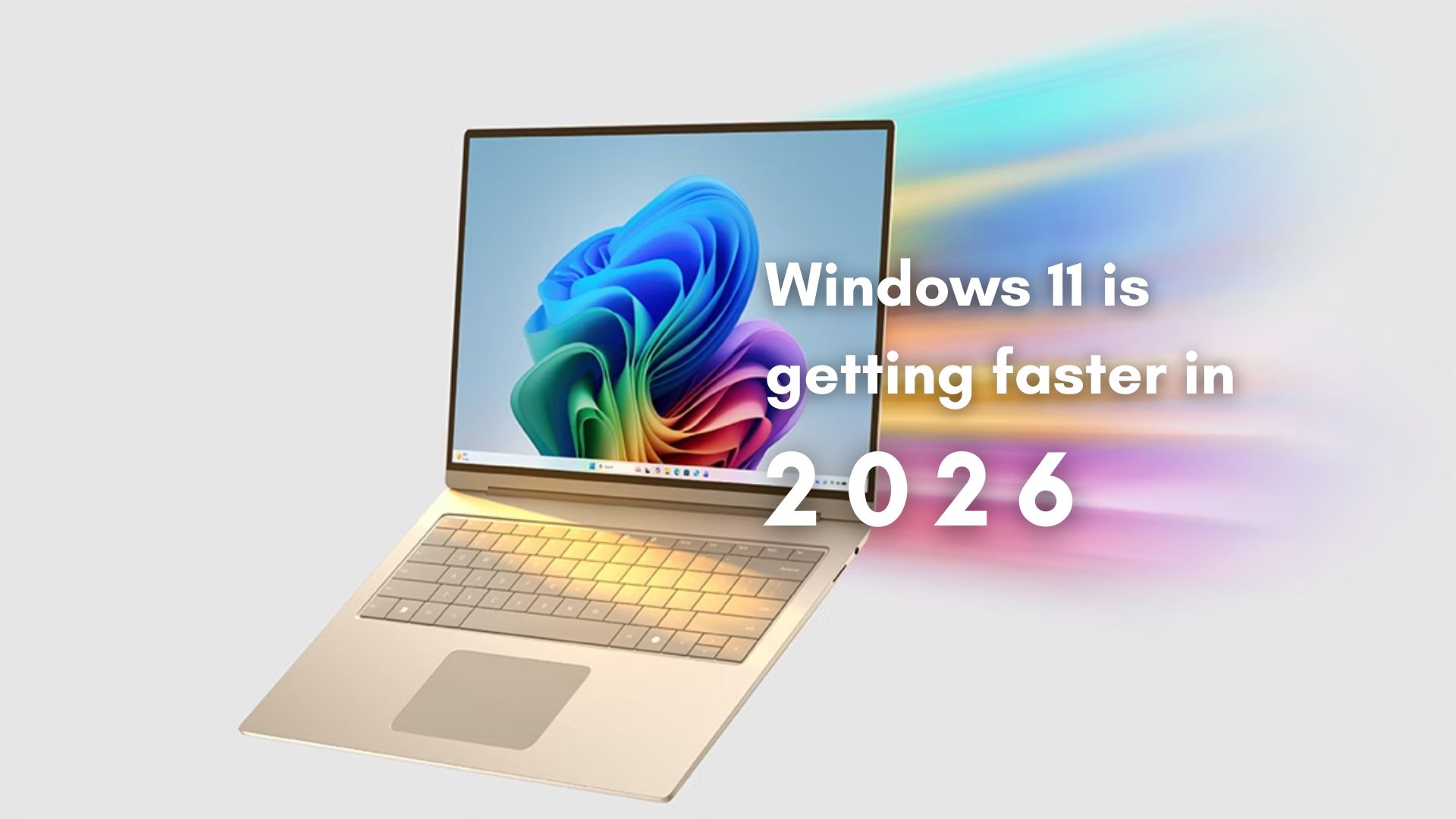
Microsoft has recently begun to gradually implement these improvements in Windows 11, such as extending or pausing Windows updates on demand, accelerating startup item loading, and promoting a series of large-scale system optimizations. The article believes that Microsoft is not just making verbal statements in 2026, some changes have begun to be pushed to Windows Insider test users, and at least 18 major updates are under development.
In terms of specific improvement directions, the report first mentioned that Microsoft is trying to create a more "quiet" Windows experience. According to information cited in the article, Microsoft executives have confirmed that the company plans to reduce ads and upsell prompts in Windows, especially during the first boot configuration phase, the OOBE process. Currently, this phase often recommends services such as Microsoft 365, OneDrive, Xbox Game Pass, and even Copilot, but Microsoft has not explicitly stated that it will completely remove this content, but has confirmed that it will reduce such interference and further simplify the initial setup and guidance process, allowing users to reach the desktop with fewer steps.
The second key change mentioned is taskbar movability. The report pointed out that Microsoft has confirmed that Windows 11 will in the future allow users to move the taskbar to any side of the screen, as in earlier versions of Windows, and also plans to add taskbar size adjustment capabilities similar to Windows 10 to improve interface flexibility and personalization.
The third important adjustment involves the Start menu. The article states that the current Start menu in Windows 11 is not fully natively implemented, with the "Recommended" area using a React Native solution, which performs normally in most cases, but still has latency issues, especially when there are many recommended items, making it more prone to stuttering. To solve this problem, Microsoft plans to switch the Start menu to the WinUI framework to improve performance and also prepare to support the adjustable size functionality similar to Windows 10.
In addition to these more intuitive changes, the report also mentioned that Microsoft is weakening the integration of Copilot in some Windows 11 applications, including the screenshot tool and Notepad. At the same time, File Explorer will continue to improve speed, smoothness, and stability, reduce interface flickering, improve navigation and search performance, and enhance file transfer reliability.
On a lower-level system experience, Microsoft is also promoting reducing the basic system memory footprint and fixing display inconsistencies of dark mode in old dialog boxes, file property windows, operation pop-ups, account interfaces, and even the registry editor. On the other hand, more functions in the Control Panel are still slowly migrating to the modern "Settings" app, but the report points out that Microsoft cannot rush this matter, as older hardware, legacy drivers, and enterprise workflows still rely on these historical components.
Microsoft is trying to fix the controversial points exposed in Windows 11 over the past year in a more pragmatic way, focusing on "returning to the basic experience" from update mechanisms, performance, interface noise, and native experience. According to the report, these improvements are expected to be rolled out gradually throughout the year, and whether Microsoft can regain the trust of Windows users will depend on whether these promises can be stably implemented.