Microsoft Releases Source Code for 86-DOS 1.00 on its 45th Anniversary
To commemorate the 45th anniversary of 86-DOS 1.00, Microsoft has released its source code, continuing its efforts to open up early historical materials from its operating system history. This follows previous releases of MS-DOS 1.25, 2.11, and 4.0 source code, aiming to preserve and share these resources for research, preservation, and the interest of industry professionals and enthusiasts.
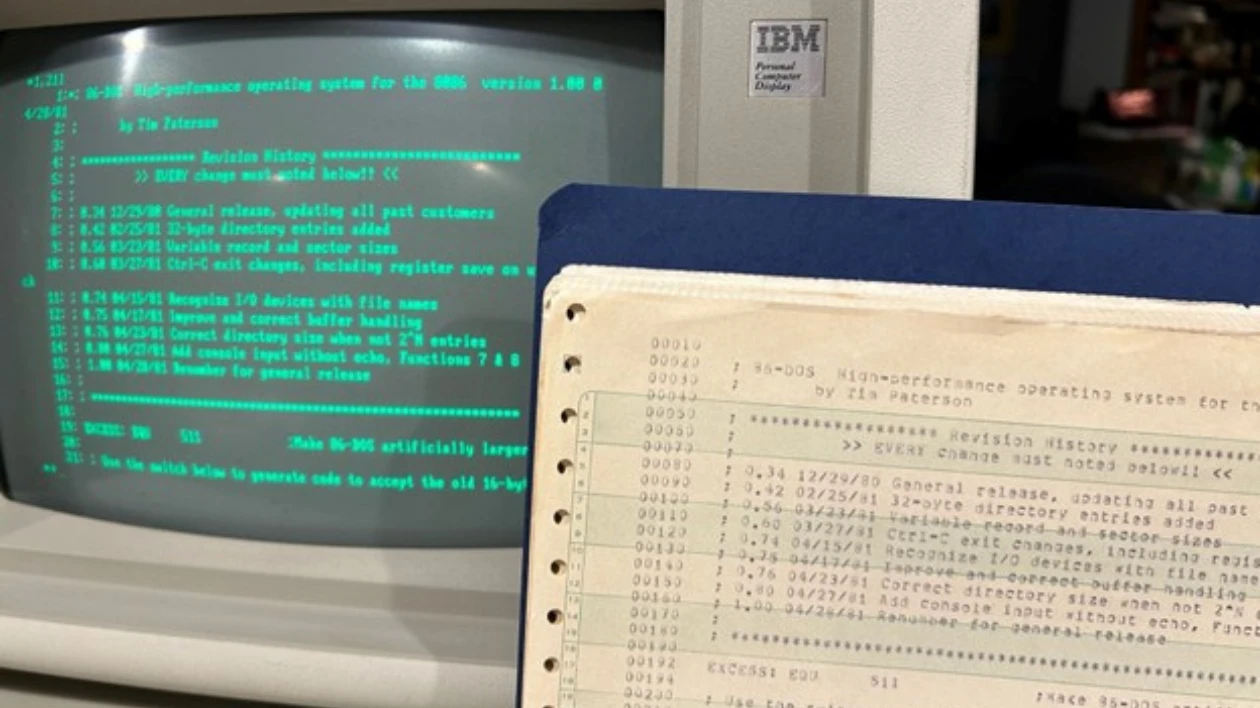
Microsoft states that this work is more than just uploading code to GitHub. Software history exists not only in the source code itself but also in scans, internal documents, assembler printouts, and the various “analog era” traces left behind during operating system development from the late 1970s to the early 1980s. Microsoft emphasizes that this historical context is equally essential to truly understanding the origins of today’s platforms.
The newly released materials provide an earlier window into the development process of PC-DOS 1.00, the first official DOS version for the IBM PC platform. Microsoft explains that a team of historical researchers and digital preservationists, led by Yufeng Gao and Rich Cini, located, scanned, and transcribed numerous source code printouts from DOS author Tim Paterson.
According to Microsoft, the materials include the 86-DOS 1.00 kernel source code, snapshots of multiple PC-DOS 1.00 kernel development stages, and source code for well-known utilities like CHKDSK. Notably, the preserved materials include not only assembly source code listings but also printouts of the assembler itself. Microsoft believes these materials offer an extremely rare perspective, allowing observers to understand how MS-DOS/PC-DOS evolved step-by-step and to see the true appearance of operating system development in that era, rather than a retrospectively organized version.
Microsoft further points out that these materials are not traditional, packaged, officially released operating system versions. Instead, much of the content resembles a record of the work status at a specific point in time, accompanied by handwritten notes from Tim Paterson himself. Microsoft describes it as “a Git repository printed out as commit history”: they string together a clear timeline, showing when features were added, what errors occurred during development, and how they were later corrected. These physical materials have also been donated by Tim Paterson, and the public will be able to view these original archives, still “telling history,” at the Interim Computer Museum.
Microsoft thanks all those involved in organizing, reviewing, and publishing these materials, and points out that this type of “software archaeology” requires legal review, archival organization, and technical verification, and is of great importance for preserving the common history of the entire industry.
For those wishing to delve deeper, Microsoft recommends visiting the websites of Yufeng Gao and Rich Cini, as well as Joshua’s research on OCR processing of the printouts. Microsoft also states that the public can now visit the DOS-History/Paterson-Listings project on GitHub to view the relevant scanned listings and OCR-organized code; Microsoft has also collaborated with the project maintainers to open it under the MIT license via pull requests, making it convenient for researchers, hobbyists, and technology history enthusiasts to use.
Learn more: