Servo Browser Engine Advances FreeBSD Support
Following the recent release of Servo 0.1, the Servo project has announced its latest monthly progress report, focusing on new achievements in feature completion and platform adaptation for this modern open-source browser engine.
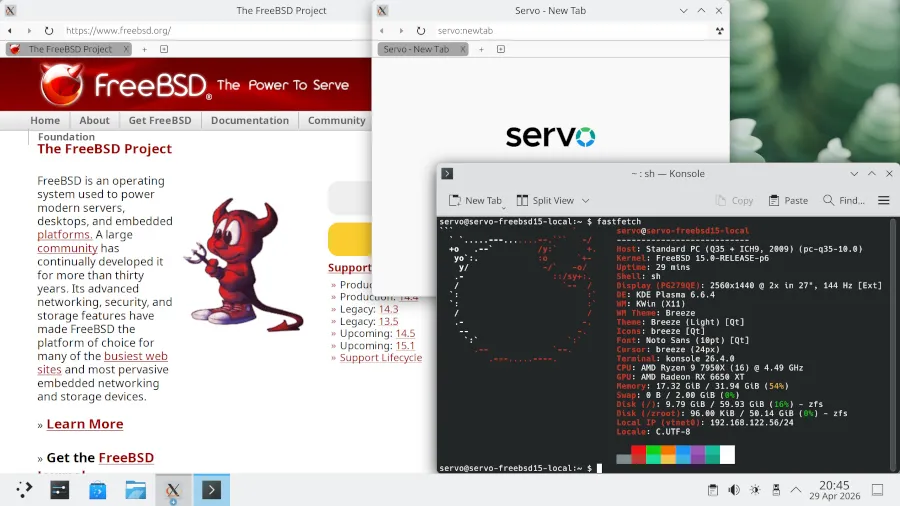
Servo has recently added support for several web platform capabilities, including HTML input elements with the “range” type, width and height attributes in SVG tags, and a number of new CSS features and DOM APIs. This indicates that Servo is continuing to fill in the basic capabilities required by modern browsers and steadily advancing the implementation of mainstream Web standards.
Meanwhile, Servo’s demo browser, Servo Shell, has undergone a name change. The project team stated that the program’s binary name after installation is now servoshell, and servoshell.exe on Windows platforms, no longer uniformly using the name servo as before.
In terms of platform compatibility, the Servo team is also continuing to advance support for FreeBSD. Reports indicate that the currently released Servo 0.1 version still has some FreeBSD build issues, but in the latest development code, although progress has been made, there are still a few remaining issues that need to be further resolved; details are currently publicly available through GitHub issue pages.
In addition to FreeBSD adaptation work, Servo developers are also continuing to enhance the engine’s embedded-friendliness, hoping to make it a more viable alternative to Chromium Embedded Framework for application developers. At the same time, the project is also advancing work related to the newly released mechanism of Crates.io to provide support for its release and distribution within the Rust ecosystem.
Overall, this latest progress report shows that Servo is currently synchronously advancing along three main lines: supplementing web platform functionality, improving cross-platform builds and FreeBSD support, and enhancing feasibility in embedded use cases. More details about these improvements are further explained in the latest log on the official Servo blog: