Iran War Boosts China's High-Growth Industry: Coal-to-Chemical New Materials
The large-scale coal combustion boom that once supported China's economic rise is now gradually slowing down. However, this fossil fuel still has other uses, and the Iran war is greatly boosting one key track. The conflict has dealt a major blow to much of Asia's petrochemical industry – which is highly dependent on Middle Eastern crude oil for the production of raw materials for everything from PVC pipes to paracetamol. The near-shutdown of the Strait of Hormuz has pushed up production costs and even led to supply shortages in some categories.
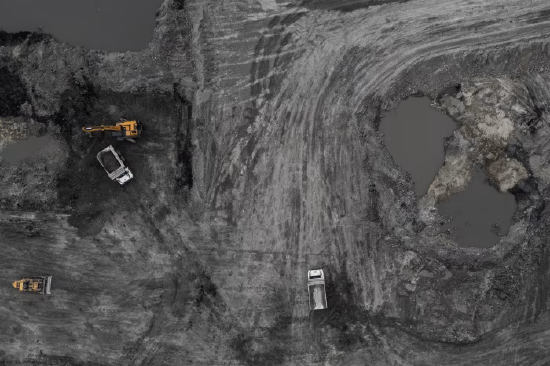
An aerial view of an open-pit coal mine in Inner Mongolia, China, with mining trucks and excavators parked in the mine.
But the war has brought a boon to China's coal-to-chemical and coal-to-liquid fuel producers. They are not only immune to the impact of rising oil prices, but also benefit from higher product prices and are currently working to expand production capacity.
Data from energy research firm McCloskey shows that coal demand in the chemical industry grew 11% year-on-year in April. Since the outbreak of the Iranian conflict, the stock prices of coal-to-chemical companies have soared, while the stock prices of their peers relying on crude oil have performed poorly.
Even before the Iranian crisis, the coal-to-chemical industry had already offset the initial gains made in decoupling China's economic growth from fossil energy consumption. Data from the Energy and Clean Air Research Center shows that the chemical industry was the main reason for the increase in China's industrial carbon emissions last year. The non-profit organization estimates that China's chemical industry consumed 440 million tons of coal last year, almost equivalent to the total coal demand in the United States for the entire year.
The rise of China's coal-to-chemical industry is driven by coal companies seeking to open up new markets, and also aligns with Beijing's energy security strategy. Chemical market analysts point out that for China, which will never be able to achieve oil self-sufficiency, the ability to produce coal-to-chemicals is a crucial geopolitical buffer.
The idea of converting black coal into various useful products originated from the same energy security anxieties a century ago. Many of the core processes of modern coal-to-chemicals were developed by German scientists in the early 20th century. During World War II, Nazi Germany, lacking oil, relied on these technologies to convert coal into fuel, and even artificial butter. Today, South Africa, which is rich in coal resources, also uses the same core technology to produce transportation fuels.
Now, another war has confirmed China's foresight in viewing coal-to-chemicals as a key strategic industry. Improved corporate profitability further supports the investment logic of new coal-to-chemical projects.