Microsoft Tests Auto SR Upscaling on Xbox Ally X, a New Competitor to DLSS
Microsoft has begun testing its Automatic Super Resolution (Auto SR) feature on the Xbox Ally X handheld device. This technology is seen as a direct competitor to NVIDIA DLSS, aiming to improve the frame rate and image quality of PC games. Auto SR first landed on select Copilot Plus PCs nearly two years ago, and Microsoft is now bringing it to this 7-inch handheld, initially offering a preview test to Xbox Insider users.
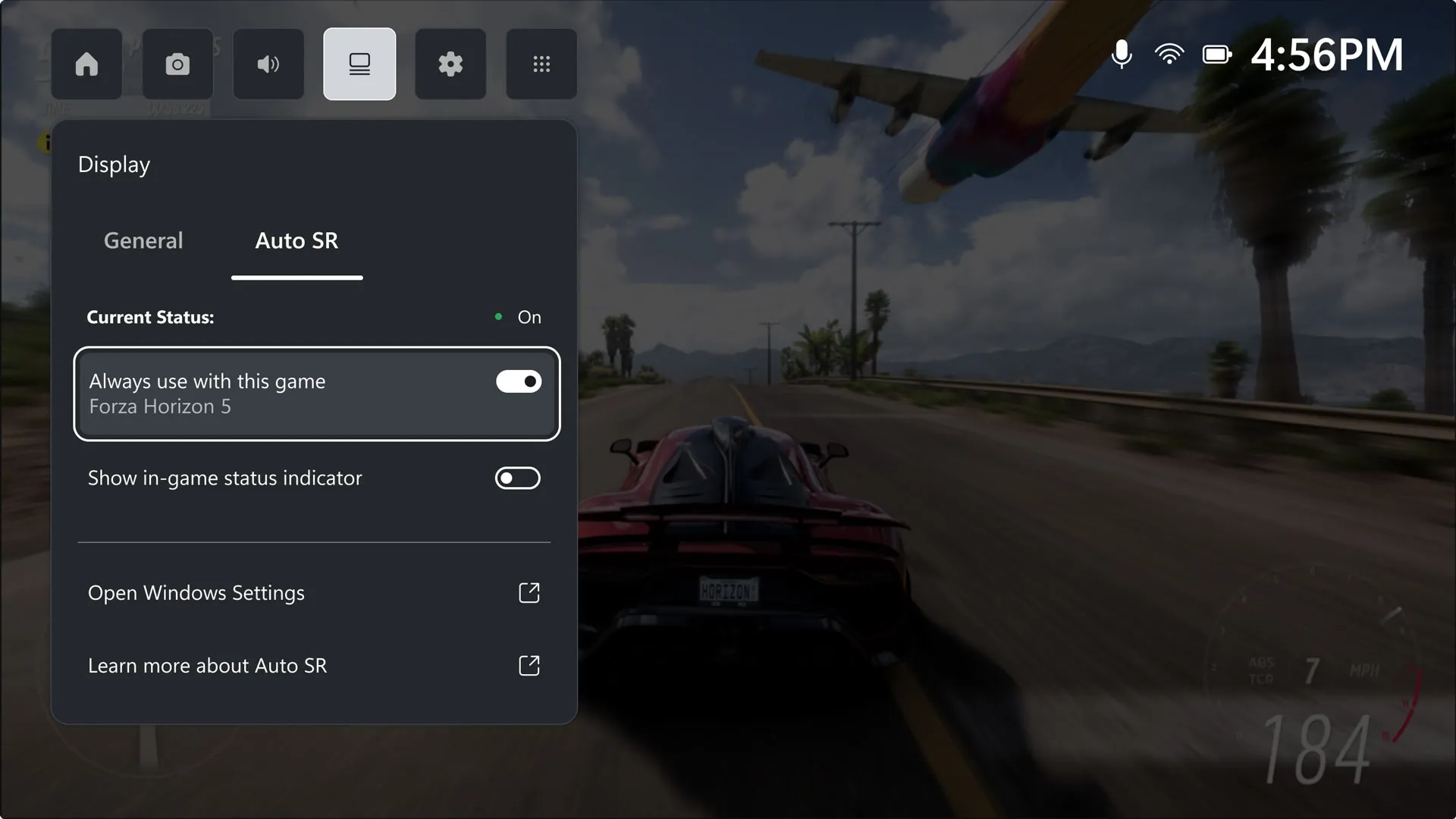
In a blog post introducing Auto SR, Microsoft stated that this test focuses on docked play – the scenario of connecting the Xbox Ally X to a larger display device for gaming. The company claims that larger screens and higher resolutions make issues like decreased image quality and unstable frame rates more noticeable, which are precisely the pain points Auto SR is designed to solve. Therefore, the preview phase prioritizes docked mode, hoping players will experience the greatest value in this scenario.
In terms of how it works, Auto SR is very similar to NVIDIA DLSS: it renders game visuals at a lower resolution to improve frame rates, and then uses upscaling algorithms to enlarge and reconstruct the image, thereby improving performance while maintaining relative clarity. DLSS has achieved “surprisingly high” popularity among PC gamers in recent years, with over 80% of RTX graphics card users enabling DLSS upscaling. Microsoft also admits that it has become a core component of many modern game rendering processes, and players have clear expectations for similar technologies.
Unlike DLSS, AMD FSR, or Intel XeSS, which require game developers to integrate support into games, Microsoft’s Auto SR is a feature built into the Windows system layer and can directly upscale existing games. In Windows 11, Auto SR will be activated through the Game Bar, allowing players to manually enable or disable the feature for DirectX 10 or later versions of games. However, Microsoft also notes that the actual effects may vary from game to game.
It is worth noting that the early implementation of Auto SR was limited to the latest Qualcomm Snapdragon laptop platforms, and was only automatically activated for 12 whitelisted games at the time. Now, this technology has been brought to the AMD-based Xbox Ally X handheld and opened up to more games using DirectX, indicating that Microsoft is accelerating the development of Auto SR into a system-level capability covering multiple hardware platforms and devices.
Microsoft is currently demonstrating the effects of Auto SR in terms of frame rate improvements and texture detail enhancement through Forza Horizon 5, showcasing its performance in real-world gaming scenarios. As the testing range expands, whether Auto SR can become a “second choice” to compete with DLSS in the PC ecosystem, and how much practical experience improvement it can bring in the combination of handheld and large-screen TV scenarios, will become the focus of attention for players and the industry.