Elon Musk Confirms xAI Used OpenAI Models to Train Grok
During a federal lawsuit against OpenAI, Elon Musk admitted in testimony that his AI company, xAI, utilized OpenAI's models through a technique called "distillation" to train its chatbot, Grok, bringing this previously tacit industry practice into the spotlight.
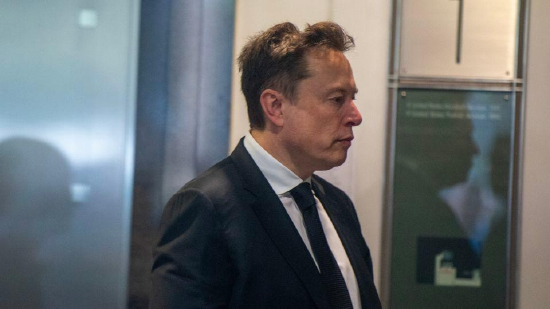
Recently, OpenAI and Anthropic have been strongly criticizing the practice of third parties training new models by intensely querying publicly accessible chatbots and APIs, a process known as “distillation.” Over the past few months, public attention has largely focused on certain Chinese companies accused of building open-source weight models through distillation, models that approach the capabilities of leading U.S. products but can be offered externally at a lower cost. However, within the tech community, many practitioners have long believed that leading U.S. laboratories also use similar methods to avoid falling behind in the competition.
This speculation has now been confirmed in at least one case. In testimony on Thursday at a federal court in California, when asked if xAI used distillation techniques, based on OpenAI models to train Grok, Musk stated that it was “a common practice among AI companies.” When pressed if that could be understood as “yes,” he replied, “partially.”
Musk is currently suing OpenAI, as well as its CEO Sam Altman and co-founder Greg Brockman, alleging that they violated their original non-profit mission by transforming OpenAI from a non-profit organization into a for-profit structure. The trial began this week, and Musk’s testimony has been one of its central events.
Musk’s admission is significant because distillation technology is seen as a threat to the core advantages of large AI companies: these companies invest massive amounts of capital in building computing infrastructure, attempting to maintain a lead through scale barriers, while distillation could allow other software developers to train models with comparable capabilities at a fraction of the original cost. In this context, there is also irony—leading laboratories themselves are repeatedly probing and even accused of “crossing the line” on copyright boundaries to obtain sufficient training data, only to now defend against others “learning” their models using compliant interfaces.
From a timeline perspective, xAI was founded in 2023, several years after OpenAI, so its attempt to “learn from” the then-industry leader is not surprising. It is currently unclear whether distillation constitutes a clear legal violation, and more realistic constraints may come from the terms of service set by each company for product use—distillation is often considered a violation of these terms, rather than necessarily touching upon codified law.
In response to concerns about “copying” of models from China, OpenAI, Anthropic, and Google have launched a joint initiative through the “Frontier Model Forum” to share intelligence and jointly address distillation attempts. Reports indicate that distillation of these large models often relies on systematic, large-scale automated questioning to infer the model’s “internal behavior patterns.” To curb such behavior, leading laboratories are attempting to identify and block suspected bulk, anomalous requests to prevent models from being “drained of their essence.” As of press time, OpenAI has not responded to a request for comment on Musk’s testimony.
Later in the trial, Musk was also questioned about a high-profile statement he made last summer: that xAI would soon surpass all companies except Google in capability. He subjectively ranked the world’s leading AI providers in court, stating that Anthropic currently ranks first, followed by OpenAI and Google, with Chinese open-source models ranking behind them. In contrast, he described xAI as a much smaller company, currently with only a few hundred employees.