OpenAI Launches Advanced Account Security with Yubico Hardware Security Keys
OpenAI has announced a new security plan called “Advanced Account Security” (AAS) for ChatGPT users, marking a more systematic effort to strengthen account protection. This feature is optional and designed for "high-value target users," but theoretically, any user willing to increase their account security level can use it.
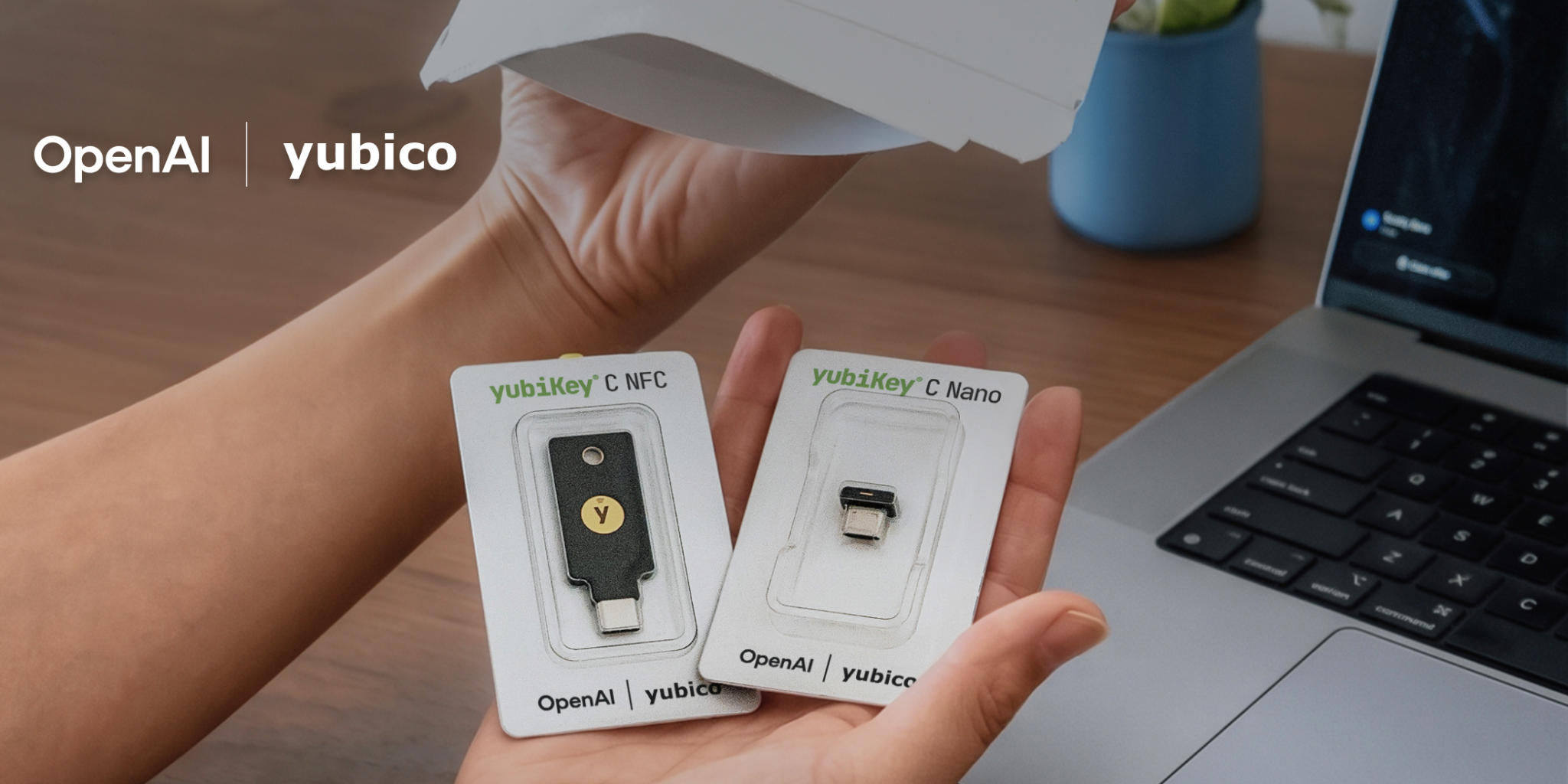
As part of this plan, digital security company Yubico has announced a partnership with OpenAI to directly bind two new hardware security keys to the ChatGPT account system, to defend against increasingly severe phishing threats. Yubico stated that this collaboration aims to help users prevent attacks that steal chatbot accounts through phishing.
The two companies will launch a pair of “co-branded” YubiKey products, named YubiKey C NFC and YubiKey C Nano. OpenAI stated that AAS is particularly suitable for groups engaged in high-risk, politically sensitive work, such as political dissidents, journalists, researchers, and elected officials, as well as corporate users protecting their business secrets stored in ChatGPT sessions. Yubico CEO Jerrod Chong stated in a press release announcing the partnership, “Our goal is to significantly reduce the risk of unauthorized access to OpenAI accounts globally.”
Security keys are small hardware devices that can be bound to digital accounts, typically used via a computer’s USB interface. Each key contains a unique cryptographic identifier internally, and only the person who physically possesses the device can complete the login for the corresponding account, adding a strong physical barrier in addition to the password.
Although the risk of “ChatGPT accounts being phished” may still seem abstract to many ordinary users, an increasing number of studies and reports show that cybercriminals are turning their attention to chatbot platforms. Because a large number of users expose sensitive business information or private details in conversations, these session contents, once in the hands of criminals, could become material for extortion, fraud, or further attacks.
Digital security is also becoming a new focus for the entire AI industry. Several weeks ago, Anthropic just released a cybersecurity model called Mythos, attempting to explore the application of AI on both offensive and defensive ends. In order not to fall behind on this issue, OpenAI has recently released a series of measures related to cyber defense, including launching a digital security framework for the “intelligent age,” and this collaboration with Yubico is the latest link in its security strategy.
Of course, enabling hardware security keys can significantly improve account security, but also brings trade-offs in actual use: once a user loses the key, OpenAI will not be able to help them recover account access. In other words, a ChatGPT account bound to a security key, once the “key is lost in the real world,” the corresponding ChatGPT session records and account data may also be permanently lost.