US Marine Corps Showcases Textron-Built "Pathfinder" Ripsaw M1 Unmanned Ground Vehicle
At the recent "Modern Marine Corps Exposition" in Washington D.C., Textron Systems officially unveiled the Ripsaw M1, an unmanned combat platform specifically designed for the US Marine Corps. This robotic vehicle is positioned as a "force multiplier" for manned-unmanned teaming, and will operate alongside the Marine Corps' next-generation Advanced Reconnaissance Vehicle (ARV) and Amphibious Combat Vehicle (ACV).
According to the US Marine Corps' ongoing "Force Design 2030" plan, the Corps is gradually replacing its 1970s-era AAV7A1 amphibious assault vehicles and LAV-25 light armored vehicles with ARVs and ACVs, respectively. This upgrade aims not only to improve platform performance and crew safety, but also emphasizes the adoption of modular, networked architectures, reserving interfaces and space for collaboration with unmanned ground vehicles like the Ripsaw M1.
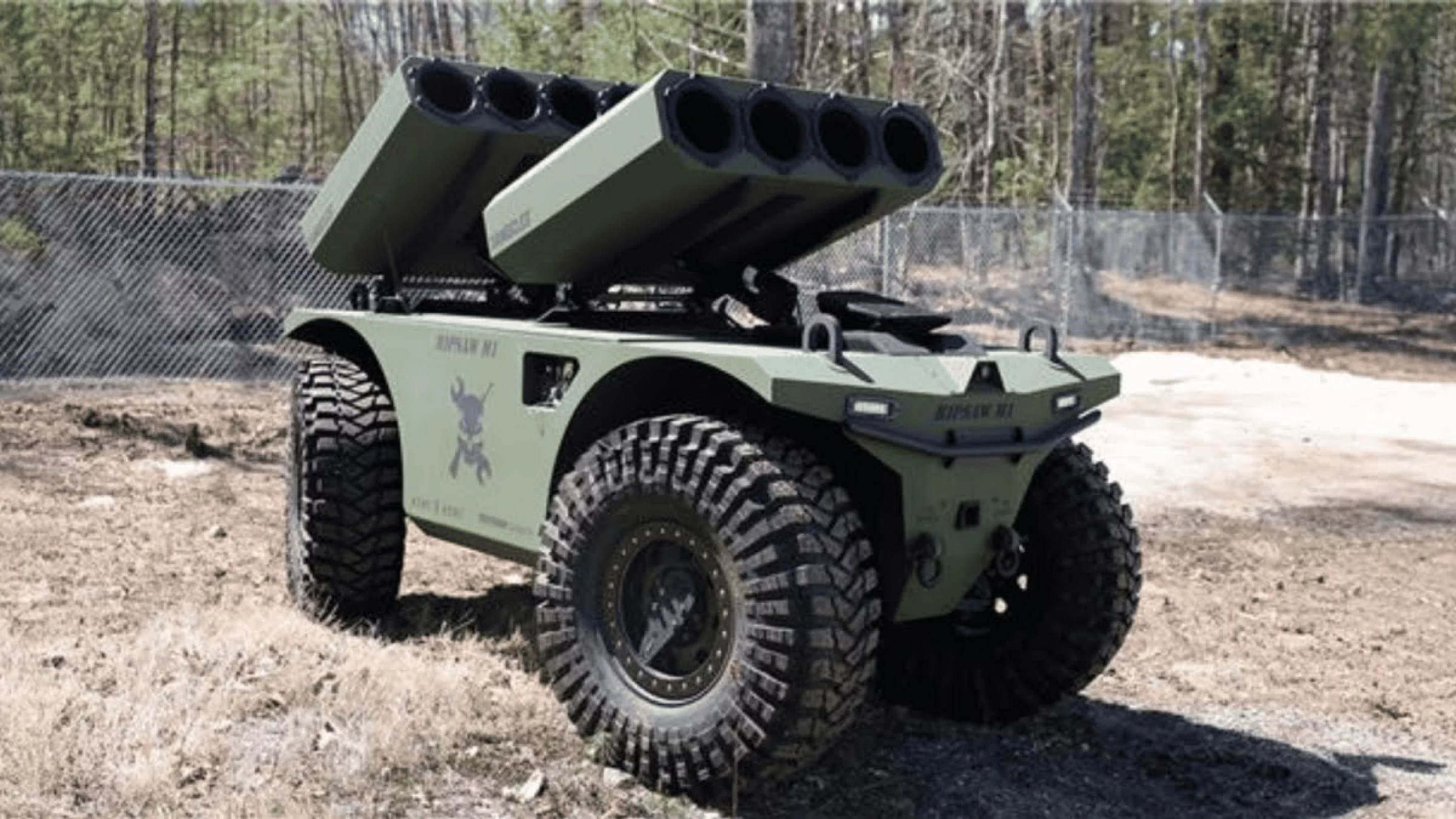
The Ripsaw M1 continues the technological lineage of previous Ripsaw robots, but differs from the larger M5 developed for the US Army. The M1 is more compact overall and has transitioned from a traditional tracked structure to a wheeled design, due to the Marine Corps' high priority on amphibious and littoral combat capabilities. The M1 must be able to adapt to wet and complex terrain environments such as beaches and coastlines.
In terms of operational positioning, the Ripsaw M1 is considered a "teammate" and "force multiplier" for the ARV, with the ARV serving as the command center and the M1 acting as a forward reconnaissance element. The vehicle weighs approximately 4,300 pounds (approximately 1,950 kilograms), is about 10.5 feet (approximately 3.2 meters) long, and can carry up to 2,000 pounds (approximately 907 kilograms) of payload. Its all-electric all-wheel drive system has a top speed of 53 miles per hour (approximately 85 kilometers), can maintain approximately 20 miles per hour (approximately 32 kilometers) in silent mode, has a range of 30 miles (approximately 48 kilometers), and can traverse water obstacles up to approximately 48 inches (approximately 123 centimeters) deep.
In stealth operation mode, the M1 can rely on high-resolution sensors to perform reconnaissance tasks and gather battlefield intelligence. It can also serve as a "decoy" in high-risk areas such as complex terrain and narrow passages, entering potential ambush zones ahead of manned platforms to lure out enemy fire positions, or to probe for obstacles and clear pathways.
However, the Ripsaw M1 is more than just a "pack mule" or reconnaissance platform. Its modular design allows for rapid conversion into various combat configurations, including a hard-kill anti-drone weapon platform, or the integration of loitering munition systems like "Damocles" for searching and continuously waiting in the air for targets to appear before engaging. By changing mission modules, the M1 can flexibly switch between roles such as air defense, suppression, and fire support depending on the battlefield environment.
Sara Willett, Vice President of Programs at Textron Systems, stated that the M1 technology validation platform demonstrates the "upper limit of possibility" for unmanned ground vehicles supporting Marine Corps missions. The company, along with the Howe & Howe team, has combined its experience in multi-domain autonomous robotic systems on land, air, and sea into this platform, based on a common "robotic core," allowing for scaling the platform's size, weight, and power while maintaining a common architecture, thereby balancing transportability and battlefield agility.