Intel Arc G3 Extreme Scores Leaked: CPU and Integrated Graphics Performance Both Impressive
With the MSI Claw handheld gaming console equipped with the Intel Arc G3 Extreme dedicated handheld processor gradually appearing in retail channels, this new CPU and its integrated Arc B380 integrated graphics have also appeared in benchmark databases ahead of time. According to the latest PassMark benchmark record, the Arc G3 Extreme delivered competitive scores in both CPU and GPU aspects: a multi-core score of 29622 and a single-core score of 4288.
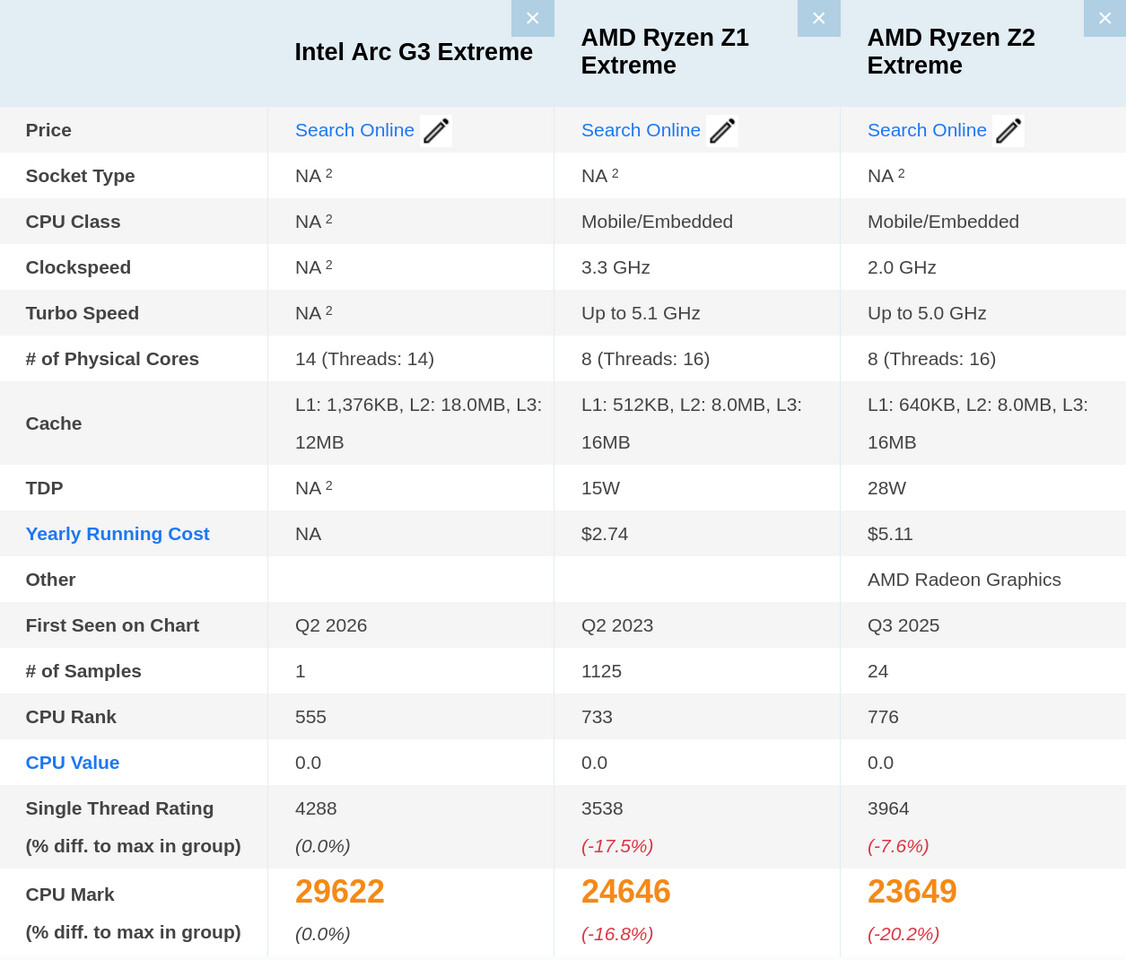
As a comparison, the AMD Ryzen Z2 Extreme, which has almost “dominated” the handheld gaming market, achieved 23649 points in the same PassMark multi-core test, with a single-core score of 3964 points. Overall, it is approximately 20% slower than this new Intel processor. However, it should be noted that the specific power consumption (TDP) of this 14-core Intel chip in this test has not yet been released. Intel has previously been criticized for its poor performance in the low-power range in the handheld gaming field, and this still needs further verification.
Currently, PassMark has not yet included GPU benchmark data for the Arc B380 integrated graphics card equipped with the Arc G3 Extreme. However, information indicates that the B380 is based on the same 12-core Xe3 GPU core as the Arc B390, with a core frequency only 200 MHz lower. Therefore, the overall graphics performance is expected to be very close to the B390. Previous tests have proven that the Arc B390 is significantly superior in performance to the AMD Radeon 890M, which also provides a reference expectation for the actual performance of the B380.
For handheld gamers, performance improvements are certainly something to look forward to, but the final experience will also depend on the balance between power consumption and battery life. If the Arc G3 Extreme can maintain a performance level close to that of this leak at a lower TDP, combined with the advantages of the Arc Xe3 architecture in graphics performance, the new generation of handheld devices equipped with this chip is expected to bring a more direct challenge to the existing AMD camp in the 2026 portable gaming market.