Study Reveals the Hidden Role of Malaria in Human Evolution
A recent study shows that early humans actively avoided areas with high malaria risk for tens of thousands of years, which not only altered their migration and settlement routes but also subtly reshaped the population patterns and genetic diversity in human evolutionary history. The study was conducted in collaboration by the Max Planck Institute for Geoanthropology, the University of Cambridge, and other institutions, and the results have been published in the journal *Science Advances*.
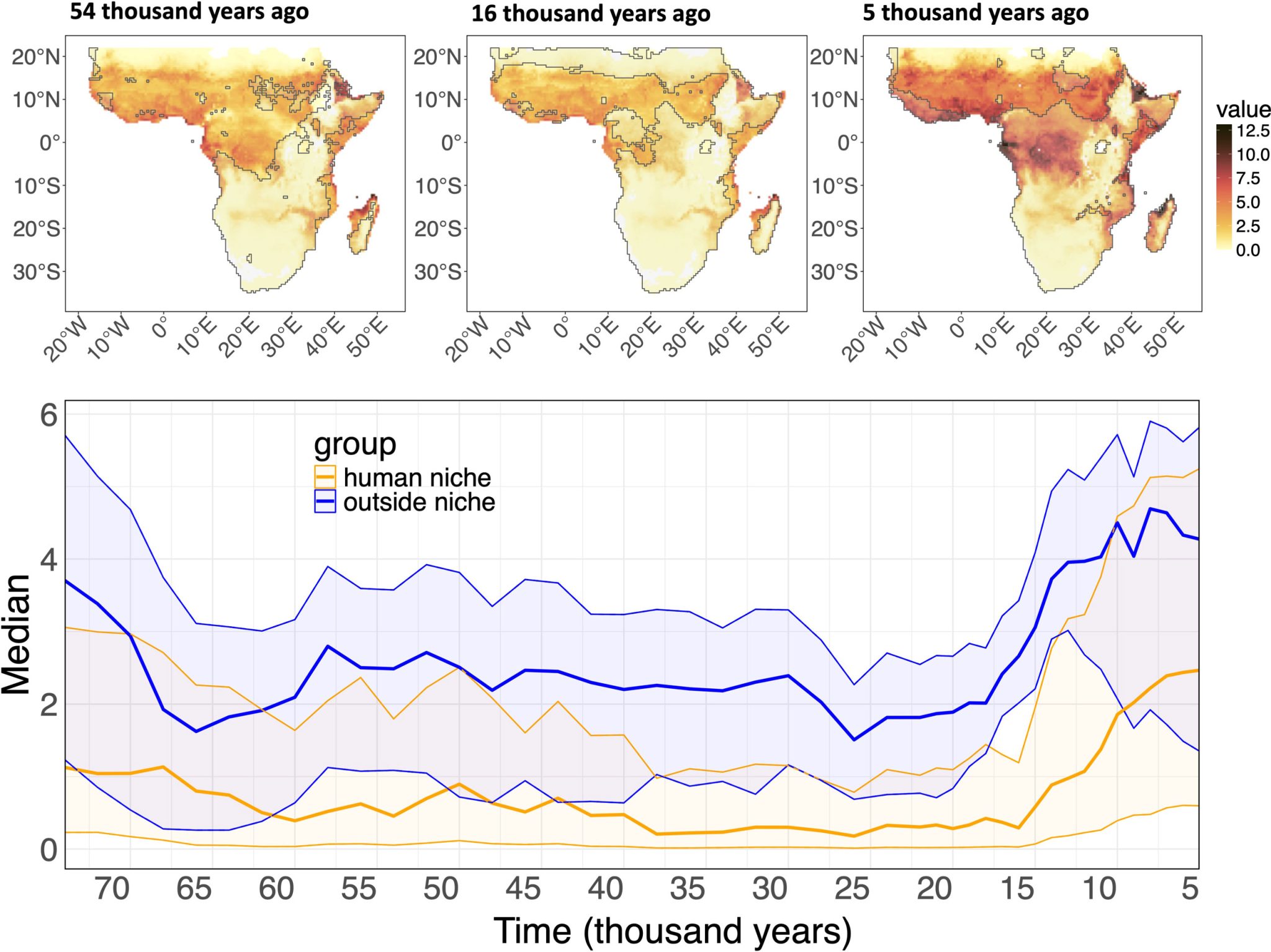
For a long time, the scientific community has generally believed that modern humans did not originate from a single “cradle” in Africa, but from multiple, interconnected and evolving populations scattered across Africa – a “puzzle.” Past explanations have largely attributed climate change as the dominant factor in explaining when and where these populations settled and how they interacted. The latest research suggests that infectious diseases such as malaria were also a significant force in shaping the geographical distribution and evolutionary patterns of early humans.
Malaria is a parasitic disease transmitted by Anopheles mosquitoes, with *Plasmodium falciparum* as the main pathogen, causing fever, anemia, and even severe complications, posing a strong and sustained selective pressure on human populations. The research team focused on a key time window from approximately 74,000 to 5,000 years ago – a period both before the large-scale exodus of humans from Africa and before the emergence of agriculture, which fundamentally altered the ecological dynamics of malaria transmission.
To assess the long-term impact of malaria on human distribution, researchers constructed species distribution models for the three major *Anopheles* species complexes, combined with paleoclimate simulations and epidemiological data, to estimate potential malaria transmission risk in sub-Saharan Africa at different time periods. They then compared this risk map with reconstructed “human niches” to observe the spatial relationship between human activity ranges and high-risk areas.
The results showed that for at least the past 74,000 years, the malaria risk level within human activity ranges has consistently been significantly lower than in surrounding areas “avoided” by humans. Researchers point out that this means that in the early stages of human history, high-malaria-risk areas were either difficult to sustain stable population settlements or were deliberately avoided, thereby geographically “separating” different groups.
This seemingly slow and dispersed spatial separation effect profoundly influenced contact, gene exchange, and migration routes between populations over long timescales, ultimately contributing to the population structure and genetic diversity patterns seen in humans today. In other words, malaria was not only a health threat faced by early humans but also a hidden driving force behind human evolution.
Andrea Manica, professor at the University of Cambridge and a co-author of the paper, said that malaria, by “segmenting” human societies into different landscape units, participated in shaping the spatial organization and population structure of modern humans. Within this framework, traditional factors such as climate and terrain are no longer sufficient to explain where humans can live alone; disease risk is also an important condition for determining the boundaries of population living space.
Eleanor Scerri, professor at the Max Planck Institute for Geoanthropology, pointed out that this research opens up new perspectives for understanding human evolution. In the absence of genetic evidence of ancient pathogens from the corresponding period, the role of disease in our “deep history” has often been underestimated. The latest findings, through a combination of environmental modeling and human niche reconstruction, provide a new framework for systematically exploring the relationship between disease and human evolution.
The research team believes that with the accumulation of more paleoenvironmental and ancient DNA data, it will be possible to further analyze how infectious diseases such as malaria have affected human migration, settlement distribution, and gene flow patterns in different regions and at different timescales. This work will help us to more comprehensively understand why modern humans are distributed around the world as they are today, and what role disease has played in this long evolutionary process.