U.S. Navy Enlists AI Firm Domino to Accelerate Mine Countermeasures in Iranian Waters
A recent contract document reveals the U.S. Navy is significantly enhancing its artificial intelligence capabilities to search for and clear Iranian mines in the Strait of Hormuz, a critical global shipping lane. The Strait handles a large volume of oil transport, and with tensions rising due to Iranian conflict, blockage of the waterway increasingly threatens global economic stability.
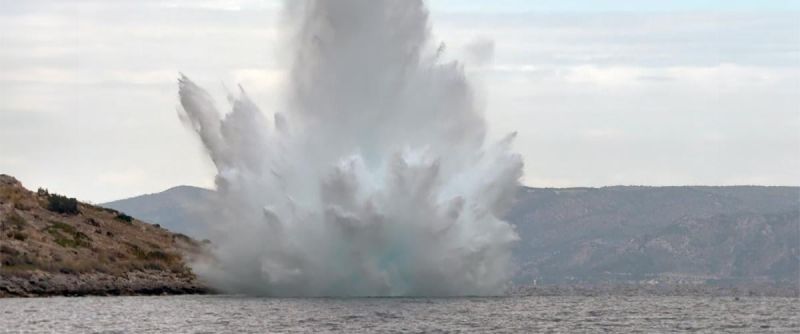
U.S. President Donald Trump previously stated that the military is clearing Iranian mines from the Strait of Hormuz. Even with a fragile ceasefire currently in place after weeks of conflict between the U.S. and Iran, clearing underwater explosives in the complex waters could take months.
According to the contract terms, San Francisco-based artificial intelligence company Domino Data Lab has received an order worth up to $100 million to help the Navy accelerate the training of underwater drones to identify new types of mines using its software platform, reducing the time to adapt to new threats from months to days.
“Mine sweeping used to be a warship task, now it’s becoming an artificial intelligence task,” Domino Chief Operating Officer Thomas Robinson said in an interview. “The Navy is paying for a platform that allows them to train, manage, and deploy AI capabilities at the speed they need in contested waters that matter to global trade and the safety of sailors.”
Last week, the U.S. Navy awarded Domino a new contract worth up to $99.7 million, further expanding the company’s role in the Navy’s “AMMO Project” (Accelerated Machine Learning for Maritime Operations), making it the AI hub for the project. The project aims to enable the Navy to achieve faster and more accurate mine detection while reducing reliance on active-duty personnel.
Domino’s software can integrate data collected from various sensors, including side-scan sonar and visual imaging systems, and help the Navy monitor the performance of different AI detection models in real-world environments in real-time, identify model failure points, and quickly push out corrective updates to improve overall detection capabilities.
The core selling point of Domino’s collaboration with the Navy is “speed.” Before the company’s involvement, updating the AI models that power the Navy’s underwater unmanned vehicles (UUVs) to identify a brand new or previously unseen type of mine could take up to six months. Domino claims that this cycle has been compressed to days through its platform.
Robinson used the current Middle East situation as an example to illustrate this point: “If certain UUVs were originally deployed in the Baltic Sea, primarily trained to identify Russian mines, and then needed to be quickly redeployed to the Strait of Hormuz to detect Iranian mines, with Domino’s technology, the Navy could be ready in about a week, rather than a year.”
A U.S. Navy spokesperson said they were unable to comment immediately on the contract and related technology deployment.