Spirit Airlines Rescue Talks Collapse, Preparing to Shut Down
Spirit Airlines is preparing to halt all operations. The struggling low-cost carrier had hoped to secure a $500 million government lifeline before running out of cash. Sources reveal that the airline failed to obtain the funding needed to stay afloat due to insufficient consensus between some bondholders and the government.
Spirit Airlines had been negotiating a bailout plan with the Trump administration: government investment in the company in exchange for warrants convertible into up to 90% of the company's equity in the future.
However, there were disagreements within the Trump administration regarding whether and how to rescue the airline. At the same time, some Spirit Airlines bondholders strongly opposed the plan, believing it would harm their economic interests.
Meanwhile, the airline also faced ongoing cost pressures from soaring oil prices.
Sources say that after losing government assistance, Spirit Airlines' cash flow is about to run out and has already begun plans to liquidate aircraft assets and shut down completely, with the specific shutdown date yet to be determined.
For the past year and a half, Spirit Airlines has been under Chapter 11 bankruptcy protection in the United States.
Its once disruptive business model – ultra-low fares and almost all extra services charged separately – now faces squeezed competition. Years of losses combined with a heavy debt burden ultimately overwhelmed the company.
The company has significantly scaled back its operations in recent months: although it still has thousands of employees, it has reduced its fleet size and retained only core hub routes such as Detroit, Orlando, and Fort Lauderdale.
In recent days, in an attempt to delay bankruptcy, the company has continued to sell tickets, even offering heavily discounted fares.
At Orlando International Airport in Florida, passengers queue at the Spirit Airlines check-in counter.
Spirit Airlines brought the ultra-low-cost airline model to the United States in 2006, emulating the business strategy of European airline Ryanair.
Initially, American consumers were very resistant to the model of being charged extra for things like water and paper boarding passes, but were still unable to resist the temptation of low fares.
Since then, Spirit Airlines has expanded rapidly and achieved stable profits, and other airlines have followed suit in imitating this business model.
Less than five years ago, Spirit Airlines became the focus of a bidding war between Frontier Airlines and JetBlue Airways.
At the time, the company chose JetBlue Airways' higher offer and reached a $3.8 billion merger agreement.
However, the merger ultimately failed. The U.S. Department of Justice filed a lawsuit opposing it, arguing that keeping Spirit Airlines independent would be more beneficial to market competition and budget-conscious travelers.
In 2024, a federal judge ruled in favor of the Department of Justice, officially halting the merger.
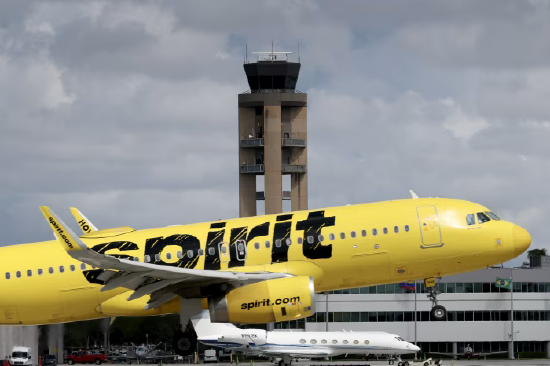
At Fort Lauderdale-Hollywood International Airport in Florida, a Spirit Airlines plane takes off against a backdrop of blue skies and white clouds.
After the merger failed, Spirit Airlines struggled to operate independently.
The company filed for Chapter 11 bankruptcy protection again in August of last year, just months after emerging from its previous bankruptcy proceedings. Since then, the company has streamlined operations, sold aircraft, and raised fares in hopes of slimming down and restructuring to regain a foothold.
The outbreak of the Israel-Hamas war further exacerbated the company's difficulties: aviation fuel prices doubled within weeks, directly disrupting Spirit Airlines' debt restructuring agreement with creditors.