Why Expensive Museum Glass Doesn't Reflect Light
Many museum visitors notice that good exhibition halls have glass that seems almost invisible, with minimal glare in photos. This isn't an illusion; expensive glass can indeed achieve low reflectivity. Ordinary glass both transmits and reflects light, with about 8% of light being reflected, causing glare and reflections in photos.
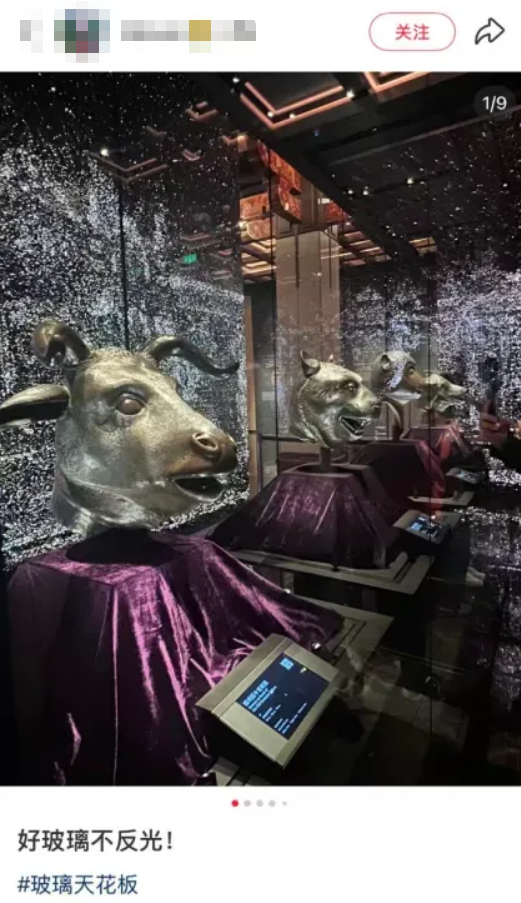
High-end museums use anti-reflective glass, also known as low-reflection glass, which uses special treatments to reduce reflectivity to very low levels, sometimes even down to around 1%.
This glass achieves its non-reflective properties through two main processes. One is roughening the glass surface to scatter reflected light, making it less noticeable to the naked eye. The more common method is coating the surface with a film. By controlling the thickness of the film, two reflected light beams are made to cancel each other out, reducing reflection at its source. Coating also creates a transition between the air and the glass, further lowering the reflectivity and providing a more stable effect than surface treatment.
Good glass isn't just non-reflective; it also needs to meet the specific requirements of museums, such as blocking ultraviolet rays to protect artifacts, maintaining its shape over long-term use, and having sufficient strength for safety. These factors significantly increase the cost.
Public procurement information shows that professional low-reflection glass display cases are very expensive, with a set costing hundreds of thousands of yuan, and the overall investment for large venues can be millions of yuan. The effect is truly achieved through cost.
In addition to the glass itself, the lighting design of the display case is also crucial. Differences in internal and external brightness and the angle of the light source can both affect reflection. Professional venues adjust the lighting to make the interior brighter and avoid direct light shining on the glass, further reducing reflective interference.