Sam Altman: OpenAI Doesn't Want to "Replace" You with AI
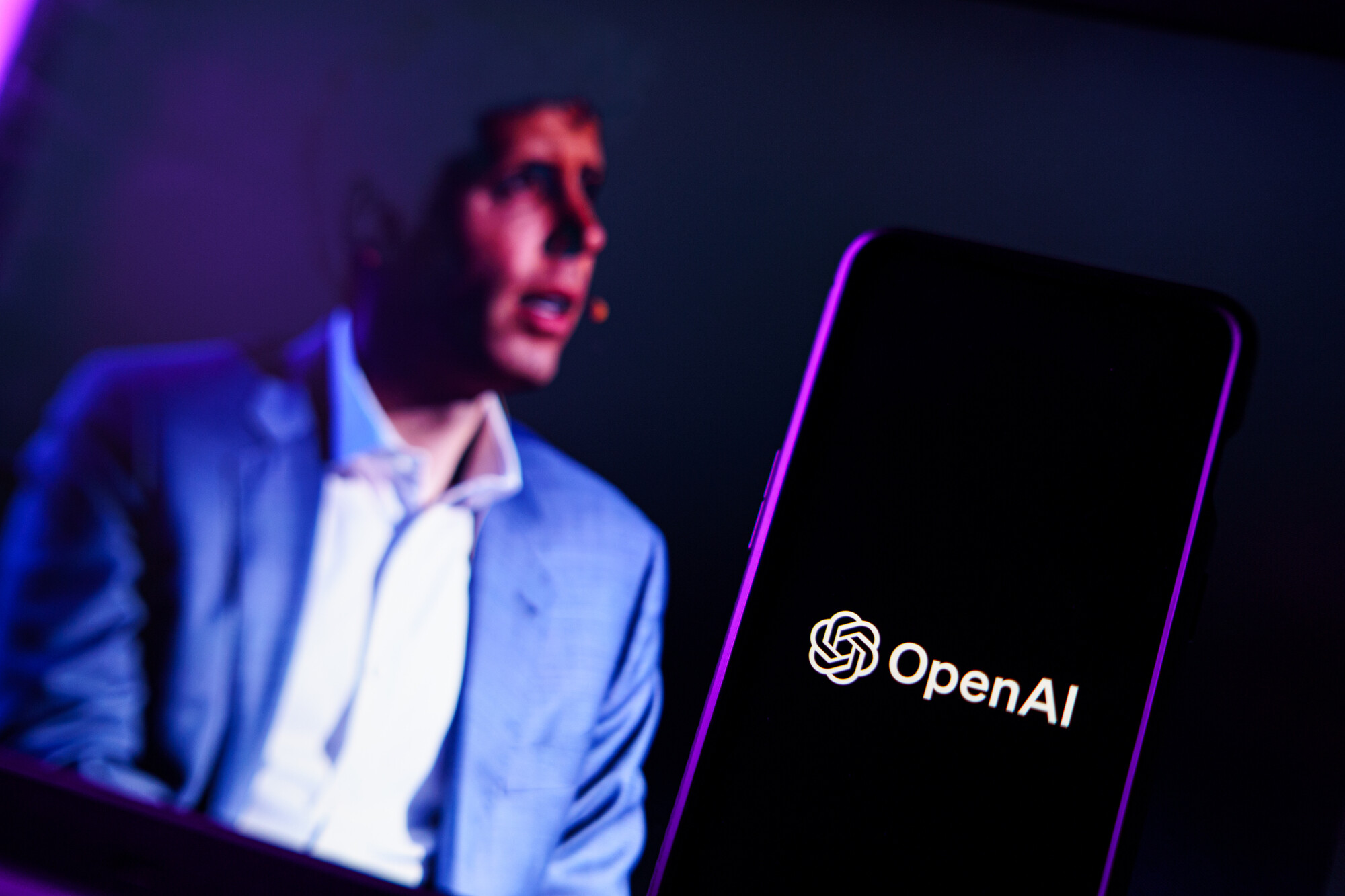
OpenAI CEO Sam Altman recently stated on social platform X that his company is not building "job-stealing robots," but rather hopes to use AI to "augment and enhance" humans, not create entities that can completely replace them. He emphasized that "doomsday scenarios for jobs are likely wrong in the long run," and people will find new, more fulfilling forms of work.
Over the past year and a half, waves of layoffs have swept across industries globally, affecting both large and small businesses. Many executives have even openly admitted that AI has driven business restructuring and workforce reductions, exacerbating public anxiety about "AI taking jobs." A typical example is King, the developer of "Candy Crush Saga," which laid off a team that had just completed the development of an internal AI tool – a tool that could generate game levels faster. Once the project ended, they were dismissed and replaced by the system they had built. In July of last year, job sites Indeed and Glassdoor were also reported to have laid off 1,300 employees because their internal AI system for matching candidates with positions performed too well, rendering related positions "redundant."
Against this backdrop, the view that "AI will eventually take over almost all jobs" has become widespread and a major reason why many people resent this technology. Fueling the fire are the repeated public statements by Dario Amodei, CEO of Anthropic (the developer of Claude) – he has repeatedly stated that humanity is only "about six months (or six to twelve months)" away from a world where "AI writes almost all code."
In response to external concerns, Altman continued to elaborate on his position on X, believing that the so-called "job doomsday" may be wrong in the long run, as society will constantly create new, more fulfilling types of work. He painted a picture of a future where, if you don't want to work hard, you "don't have to," but can still enjoy a "prosperous and wonderful life."
However, Altman himself has also faced criticism for his statements about work. He has been accused of dismissing many white-collar jobs replaced by AI as "not really work," and comparing them to physical labor such as farming. In his view, a farmer fifty years ago might not consider the daily routines of operating keyboards and attending meetings as "real labor" if they saw today's office work.
A "quiet battle" between Altman and Amodei regarding AI safety and commercialization paths has also continued for many years. Amodei worked at OpenAI in the early days, but later became concerned about the company's approach to safety and commercialization, and left around 2020/2021 with his sister and several researchers to found Anthropic, a new company that claims to be "more trustworthy." Since then, competition and disagreements between the two sides have become increasingly apparent.
Recently, tensions between the two companies have escalated further. The U.S. Department of Defense recently canceled a contract with Anthropic, and OpenAI immediately "took over" the deal, attracting more attention to the relationship between the two institutions. At an AI summit in India in 2026, when tech leaders and the Prime Minister jointly raised their hands for a group photo to show unity, Altman and Amodei deliberately did not hold hands, using this detail to demonstrate subtle opposition.
In the debate about AI and employment, there are continuous layoffs and real cases of automation systems replacing people on one side, and Altman's vision of "AI helping humanity move towards a more prosperous life" on the other. At least from his latest public statement, OpenAI hopes to position itself as a "magnifier" and "helper" for humans, rather than a "successor" who actively takes away human jobs.