37-Year Soil Warming Experiment Reveals: Soil Carbon Once Thought "Permanent" Is Being Released
A nearly 40-year soil warming experiment in the forests of Massachusetts is revealing an unexpected discovery. Scientists previously believed that long-term "stable" carbon storage in forest soils was actually not as persistent as imagined. As temperatures rise, even these stubborn carbon reserves will decompose and release carbon dioxide into the atmosphere.
Marine Biological Laboratory Distinguished Scientist Jerry Melillo explains: "Microbes are key components of soil ecosystems because they break down organic matter and cycle the elements necessary for plant growth. As climate warming reshapes these microbial communities, it could accelerate the loss of carbon from soils."
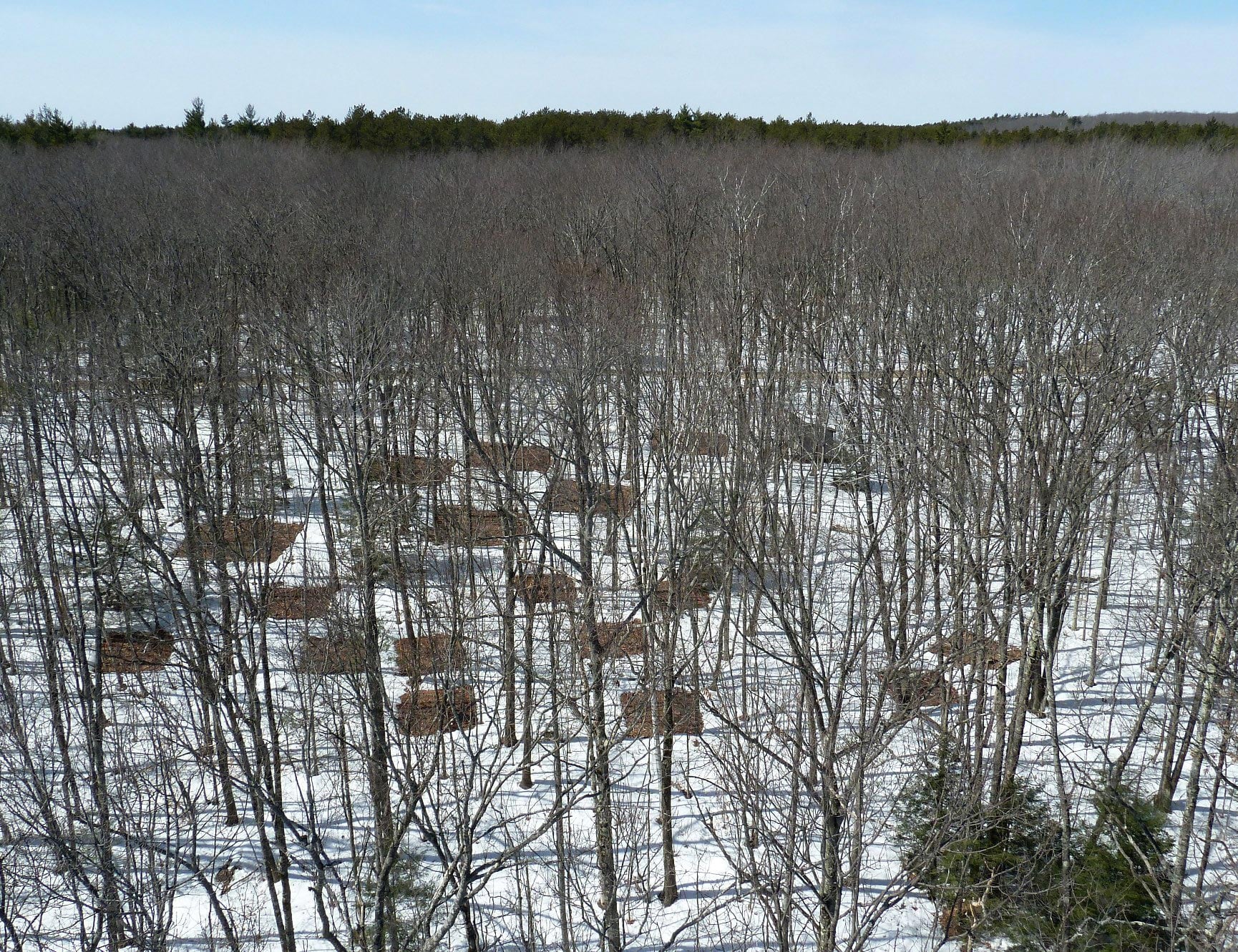
Deep within the Harvard Forest in central Massachusetts, researchers have been conducting a controlled warming experiment for 37 years. Cables buried underground keep portions of the soil 5 degrees Celsius warmer than natural conditions in each season, from frozen winters to humid summers. When the study began in the late 1980s, this temperature increase reflected the upper limit of climate predictions at the time. Today, however, this increase no longer seems extreme. Global temperatures have risen by about 1.1 to 1.4 degrees Celsius since the Industrial Revolution, and future warming will largely depend on the speed at which greenhouse gas emissions are reduced. Melillo says: "If we significantly reduce carbon dioxide emissions from burning fossil fuels, or reduce deforestation, the projected temperature increase will be lower."
Global soils store more carbon than the atmosphere and all plant life combined, making them a critical component of the climate system. Scientists have long believed that some of this carbon has actually been locked away for centuries. But new research challenges this assumption. After decades of warming, researchers observed that these so-called resistant forms of soil organic matter are beginning to decompose. This change did not happen immediately, but gradually emerged, highlighting the importance of long-term experiments that can capture changes unfolding over decades rather than years.
As these materials decompose, they release additional carbon dioxide into the atmosphere. This process could reinforce a feedback loop within the Earth’s climate system: rising temperatures lead to soils releasing more carbon, which in turn drives further climate warming. Incorporating these findings into climate models could improve predictions of future climate change.
This research was completed jointly by Atzín X. San Román, Serita D. Frey, Melissa A. Knorr, Huan Tong, Jerry M. Melillo, and Myrna J. Simpson, and the research paper was published on April 7, 2026, in the journal *Total Environmental Science*.