Uber Wants to Turn Millions of Global Drivers into the Company's "Sensor Network"
After ending its self-driving project years ago, Uber is trying to re-enter the autonomous vehicle landscape in another way: transforming the vehicles of its millions of ride-hailing drivers worldwide into a mobile "sensor array" providing data for self-driving companies and other real-world AI models.
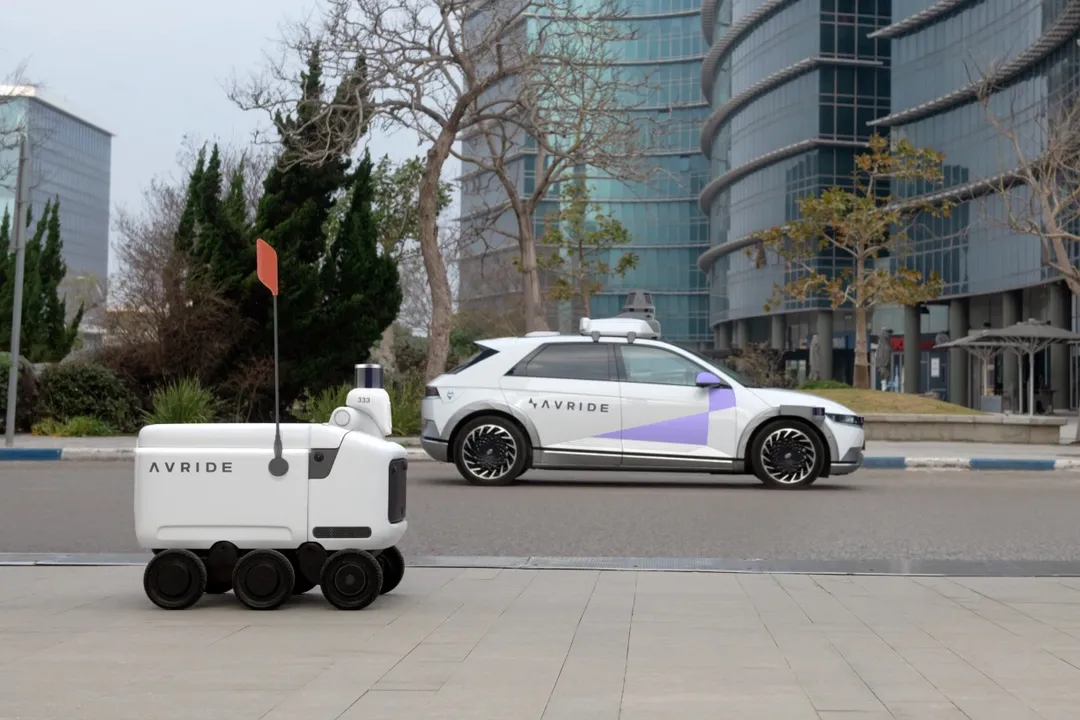
Uber Chief Technology Officer Praveen Neppalli Naga disclosed this long-term vision in an interview, describing it as a "natural extension" of the company's new AV Labs project announced in late January this year. He stated that Uber's ultimate direction is to add various sensors to privately owned vehicles driven by humans in the near future to collect real-world road scene data. Naga also emphasized that before taking this step, the company needs to thoroughly understand the capabilities and working methods of different sensor suites and wait for clearer regulatory guidance from US states on "what constitutes a sensor and how data is shared."
Currently, AV Labs is still operating with a limited fleet of dedicated vehicles equipped with sensors, operated by Uber independently from the daily driver pool. However, Uber's narrative reveals that this is just a starting point: Uber has millions of drivers globally, and even if only a small portion of vehicles are equipped with sensors, it is enough to build a road data collection network that any single self-driving company would find difficult to match. Naga believes that the bottleneck in the evolution of autonomous driving technology is no longer underlying algorithms or computing power, but rather high-quality, diverse real-world data. "The bottleneck is data," he said. "Companies like Waymo need to constantly go out and collect data, covering different scenarios."
In his vision, autonomous driving companies could order extremely detailed training data on demand through Uber's network, for example, requesting "traffic conditions at the intersection in front of a school in San Francisco during a specific time period to train a model." The real problem is that most autonomous driving companies do not have sufficient capital to deploy their own large-scale fleets globally to densely cover these long-tail scenarios. If Uber can mobilize its existing driver and vehicle resources, it has the potential to become the data supply layer for the entire industry, providing a continuous "fuel" for autonomous driving technology.
There has long been external questioning as to whether Uber will be "bypassed" by autonomous driving companies in the future, or even marginalized in the travel ecosystem, after abandoning its self-built autonomous vehicle efforts. Co-founder Travis Kalanick also publicly stated that abandoning autonomous driving was a "huge mistake." Today, through AV Labs, Uber is trying to transform its role from a developer of complete autonomous vehicles to an infrastructure and data platform in this field, leveraging its extensive driver network and order flow to provide underlying capabilities for all participants.
Uber has already partnered with 25 autonomous driving companies worldwide, including players like Wayve, which operates in London. Building on this, the company is building a so-called "AV Cloud": a fully annotated multimodal sensor data warehouse where partners can search and call for use in training their respective autonomous driving models. Naga introduced that partner companies can also run "shadow mode" inference on real orders on the Uber platform—that is, simulate how their autonomous driving system would make decisions on real trip data without actually deploying unmanned vehicles onto the road.
From its public statements, Uber is trying to package this platform as a "public utility for the industry." "Our goal is not to make money from this data," Naga said, "but to democratize it." However, given the commercial value and scarcity of high-quality data in autonomous driving and the broader AI field, whether this positioning can be sustained in the future remains questionable. In fact, Uber has made equity investments in several autonomous driving companies in recent years, and if the large-scale, differentiated training data it controls becomes part of its partners' core competitiveness, Uber's bargaining power in front of these companies is likely to be further strengthened.
Behind this concept, Uber's logic is shifting from "building cars" to "building a platform": on the one hand, it continues to maintain its entry-level advantage at the end-user level through its own travel and delivery networks; on the other hand, it attempts to sink the real trips and scenarios of driver vehicles into structured data assets to serve autonomous driving companies and other large model companies that need real-world training data. For a company that no longer personally develops autonomous driving hardware and software stacks, this may be a new path to continue participating in the next round of transportation technology changes and maintaining its presence in it.