These Animals Live Longer Than Humans – Turtles Can't Compare
Many people think of turtles when considering long-lived animals. However, "turtle" broadly refers to the entire order Testudines, with varying lifespans among different species. Larger land tortoises and sea turtles can live for over a century, while smaller turtles often don't reach fifty years.
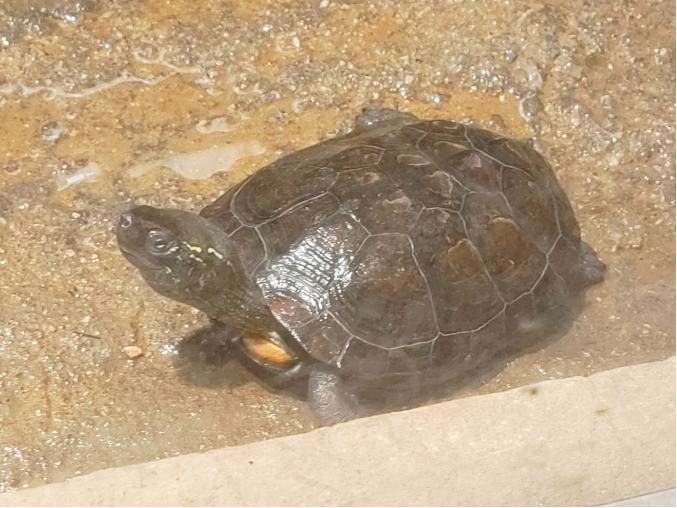
Annotation: Strictly speaking, a turtle refers to the species *Mauremys reevesii*, commonly known as the Chinese pond turtle, which can live over thirty years but rarely reaches three digits in age.
A few examples include a turtle released in the 20th year of the Daoguang reign (1840-1850) discovered by the Shanghai Natural History Museum in 1971, which may have lived over 130 years.
The turtle commonly known as the Chinese pond turtle. Image source: Author photographed at Zhengzhou Zoo.
Among the larger, long-lived turtles, the Aldabra giant tortoise (*Aldabrachelys gigantea*) has a recorded lifespan of over 190 years. This tortoise, exceeding 190 years of age, is named Jonathan.
Before Jonathan, a radiated tortoise lived to be 188 years old, and another Aldabra giant tortoise reached 255 years (though this is somewhat uncertain).
An Aldabra giant tortoise believed to have lived for 255 years. Image source: funfactz.
This lifespan clearly exceeds human lifespan. The longest verified human lifespan was that of Frenchwoman Jeanne Calment – 122 years and 164 days. The average human life expectancy is around 85 years (based on research from 1990).
Furthermore, on January 1, 2024, Lin Shemu, a resident of Fujian Province, passed away. Born on June 18, 1902, her calculated lifespan exceeded Calment’s record, but it has not yet been officially recorded.
Of course, there are animals that live even longer than these long-lived turtles. Who will break this record? Let's continue to look.
Animals That Live Longer Than Humans
Among animals exceeding the age of these giant tortoises, the red koi is a common example.
A red koi named Hanako, raised by the president of Nagoya Women's University in Japan, lived to be 226 years old, born in 1751 and died in 1977. Other fish living with her were also estimated to be over 144 years old based on scale age.
Of course, it's not just koi that can live long lives. The Greenland shark, found in the Arctic Ocean, can live up to 500 years, making it one of the longest-lived vertebrates. They don't reach sexual maturity until around 150 years old.
In 2016, scientists, based on measurements of carbon-14 isotopes in this shark's body, discovered that some sharks may have been born during the Ming Dynasty.
The bowhead whale (*Balaena mysticetus*) is one of the longest-lived mammals, capable of living to 200 years.
In 2020, genome-related research even estimated their potential lifespan to be around 268 years.
Research in 2024 revealed that other baleen whales also have long-lived members, such as the North Atlantic right whale and the Southern right whale, which can live to 130 years (these two are closely related to the bowhead whale).
Bowhead whale. Image source: Wikipedia.
Southern right whale. Image source: Wikipedia.
However, during the Industrial Revolution, due to the impact of whaling, the aforementioned two right whale species did not have records of such long lifespans. This is linked to the “premature death” caused by human attacks. The scientific community is still learning about the longevity of other baleen whales.
Besides turtles, other reptiles and birds also have lifespans that are comparable to humans, though not as long.
For example, in 2024, a wandering albatross named “Wisdom” was observed, at the age of 74, starting a new breeding cycle with her partner – she was still laying eggs at an advanced age.
In 1916, a sunflower conure kept in captivity died at the age of 120. In the final stages of its life, it even lost all its feathers.
Among crocodiles, Cassius, a saltwater crocodile, died in Australia in November 2024 at an age exceeding 120 years. Henry, a Nile crocodile, is at least 124 years old and still resides in South Africa. The leopard gecko, a distant relative of lizards, can also live to 120 years.
Spotted leopard gecko. Photographed at Wellington Zoo in New Zealand.
Vertebrates are like this, but are there other animals that live even longer? Some say the ocean quahog (*Arctica islandica*) is the longest-lived animal among invertebrates.
In 2006, based on age determination from the growth rings of an ocean quahog, scientists discovered that it was born during the Ming Dynasty and was 507 years old.
It was given the new name “Ming,” but this age became Ming’s age because it was killed by scientists when its age was determined.
Ocean quahog. Image source: Wikipedia.
How is animal age calculated?
So, how is animal age calculated? Some use the annual rings on fish scales or examine the dentin growth on mammalian teeth – similar to calculating the age of trees. The width of the scale rings can infer its growth rate, as mentioned earlier with shell growth rings.
Fish otolith mass and gill cover rings are also methods for determining fish age.
Fish scale annual rings. Image source: oceanecology.ca.
Orca teeth. Image source: oceanactionhub.org.
For turtles, age can be judged by the number of concentric rings on their carapace.
In recent decades, scientists have used fecal samples from chimpanzees, Japanese macaques, and Indo-Pacific bottlenose dolphins to determine age based on DNA methylation patterns in the feces. This has led to the inference that Indo-Pacific bottlenose dolphins have a lifespan of around 40-50 years.
The age of some animals is also determined by humans through “tagging” or other markers. For example, in 2007, scientists discovered a bowhead whale that had been harpooned in the 1880s – it continued to live for over a hundred years after being harpooned.
The aforementioned wandering albatross uses bird banding, first recorded in 1956, when its estimated age was around five years old. It has since been continuously tracked, and scientists have replaced its tags six times.
Why can they live so long? What genetic secrets do they hold?
Since they live so long, is there a longevity gene behind it? Or a secret to DNA repair? Or is it the environment in which they live? Let's look at the genome.
For bowhead whales, they have the CIRBP protein gene to repair DNA damage, and their ERCC1 gene, related to DNA excision repair, is different from other mammalian genes. These genes primarily function to enhance the whale's resistance to cancer.
After all, large and long-lived animals have more cells in their bodies and are more likely to encounter cell mutations during their long lives – but this is just a theory. Animals like elephants and large baleen whales have a much lower risk of cancer than many small and short-lived animals.
Annotation: A 2025 study suggests that larger animals have a higher incidence of both benign and malignant tumors, but the study also found that animals like elephants that rapidly evolved to large size have developed better anti-tumor mechanisms.
At the same time, large tortoises have genes that suppress tumor production that are different from those of relatively short-lived animals, possessing more powerful genes that inhibit tumor production.
Elephants also rely on a large number of TP53 genes to produce large amounts of P53 protein, which can repair or eliminate cells with damaged DNA that may become cancerous.
Image of Peto's Paradox, meaning that larger animals have a higher probability of cancer, but in reality, based on observations of Asian elephants and other large animals, their cancer rates are lower than predicted (dragon-like dinosaurs were also large, but based on fossil pathology observations, their cancer rates were high). Image source: sciencealert.com.
In addition, genes that fight aging can also be related to longevity. The spotted leopard gecko has many genes that “control” selenoproteins, which are also related to preventing oxidative aging of the body.
The long-lived Pacific rockfish (*Sebastes aleutianus*), which lives over two centuries, also relies on tumor suppressor genes and some genes that regulate the immune system.
Pacific rockfish. Image source: Wikipedia.
Does being managed and raised in captivity affect an animal’s lifespan?
As Cao Cao said, “The period of fullness and decline is not only in heaven, but the blessing of nourishing life can bring longevity.” An animal’s lifespan is related to innate conditions, but postnatal nutrition and external factors also affect whether an animal can live to a natural death.
To this end, animals that have created longevity miracles in captive conditions are typical examples.
The well-known giant panda has created many examples of longevity exceeding 30 years in captivity, such as Ba Si, the prototype of the Beijing Olympic mascot Pan Pan, and An An, a male giant panda who died in Hong Kong in 2022 at the age of 35.
Giant panda An An. Image source: virginia.arlingtoncardinal.
Under conditions of medical care and food security with fewer predators, some birds have also created new lifespan records, such as Charlie, a blue-and-yellow macaw mentioned earlier, which lived five decades longer than its wild relatives.
This talkative parrot. Image source: esato.
The lifespan of domesticated dogs or wolves raised in zoos is also higher than that of wild wolves.
For example, in 2024, F907, a one-eyed wolf who lived for 11 years, died in Yellowstone National Park. Long-lived wolves in zoos can live over twenty years, but wild wolves rarely live to be 13 years old.
Annotation: F907, the old wolf, did not die of old age, but from external injuries.
Zoo wolf. Image source: Author photographed at Beijing Zoo.
Among domesticated dogs, small dogs with longer snouts, such as Shiba Inus, have an average lifespan of over 13 years.
Shiba Inu. Image source: Author photographed in Chaoyang District, Beijing.
The wild relatives of domestic cats, the European wildcat (*Felis silvestris*), rarely live to fifteen years in the wild, while domestic cats have long-lived individuals exceeding twenty years, even reaching 25 years or more. Even more, Guinness World Records recognized a cat named Crème Puff who died at the age of 38.
Of course, different cat and dog breeds have undergone corresponding breeding, and some bred breeds occasionally encounter problems related to inbreeding and genetic defects. This often leads to a shorter lifespan for many breeds of cats and dogs.
As mentioned above, small dogs with short snouts are prone to respiratory diseases (such as French Bulldogs), while larger dogs have a shorter expected lifespan, even shorter than their wild wolf relatives, less than ten years. Among cats, Burmese and Birman cats have long lifespans, exceeding fourteen years, while Sphynx cats have short lifespans, with an expected lifespan of less than 7 years.
It seems that these creatures’ lifespans are full of mysteries. To fully understand all of this, we need to look at their genomes, physical characteristics, living conditions, and survival status.
References
[1]Firsanov D, Zacher M, Tian X, et al. DNA repair and anti-cancer mechanisms in the long-lived bowhead whale. Preprint. bioRxiv. 2024;2023.05.07.539748.
[2]Mayne B, Berry O, Davies C, Farley J, Jarman S. A genomic predictor of lifespan in vertebrates. Sci Rep. 2019;9(1):17866.
[3]Breed GA, Vermeulen E, Corkeron P. Extreme longevity may be the rule not the exception in Balaenid whales. Sci Adv. 2024;10(51):eadq3086.
[4]Mumby HS, Courtiol A, Mar KU, Lummaa V. Climatic variation and age-specific survival in Asian elephants from Myanmar. Ecology. 2013;94(5):1131-1141.
[5]Olshansky SJ, Willcox BJ, Demetrius L, Beltrán-Sánchez H. Implausibility of radical life extension in humans in the twenty-first century. Nat Aging. 2024;4(11):1635-1642.
[6]Vincze O, Colchero F, Lema?tre JF, et al. Cancer risk across mammals. Nature. 2022;601(7892):263-267.
[7]Pacheco C, Bustamante C, Araya M.Mass-effect: Understanding the relationship between age andotolith weight in fishes. Fish Fish. 2021;22:623–633.
[8]Langer, P. Longevity of Mammals in Captivity: From the Living Collections of the World, Kleine Senckenberg-Reihe 48. Mamm Biol 73, 166 (2008).
[9]Johnson RN. Tuatara genome reveals diverse insights into a remarkable reptile. Nature. 2020;584(7821):351-352.
[10]Butler, P.; Wanamaker, A. Jr.; Scourse, J.; Richardson, C.; Reynolds, D. Variability of marine climate on the North Icelandic Shelf in a 1357-year proxy archive based on growth increments in the bivalve Arctica islandica. Palaeogeography, Palaeoclimatology, Palaeoecology, 2013;373: 141–51.
[11]Ballesta-Artero, Irene; Augustine, Starrlight; Witbaard, Rob; Carroll, Michael L.; Mette, Madelyn J.; Wanamaker Alan, D.; Van Der Meer, Jaap. Energetics of the extremely long-living bivalve Arctica islandica based on a Dynamic Energy Budget model . Journal of Sea Research. 2019;143: 173–182.
[12]Keane M, Semeiks J, Webb AE, et al. Insights into the evolution of longevity from the bowhead whale genome. Cell Rep. 2015;10(1):112-122.
[13]Vollrath F. Uncoupling elephant TP53 and cancer. Trends Ecol Evol. 2023;38(8):705-707.
[14]Tollis M, Boddy AM, Maley CC. Peto's Paradox: how has evolution solved the problem of cancer prevention?. BMC Biol. 2017;15(1):60.
[15]Yagi G, Qi H, Arai K, et al. Non-invasive age estimation based on faecal DNA using methylation-sensitive high-resolution melting for Indo-Pacific bottlenose dolphins. Mol Ecol Resour. 2024;24(2):e13906.
[16]Cailliet GM, Andrews AH, Burton EJ, Watters DL, Kline DE, Ferry-Graham LA. Age determination and validation studies of marine fishes: do deep-dwellers live longer?. Exp Gerontol. 2001;36(4-6):739-764.
[17]Treaster S, Deelen J, Daane JM, Murabito J, Karasik D, Harris MP. Convergent genomics of longevity in rockfishes highlights the genetics of human life span variation. Sci Adv. 2023;9(2):eadd2743.
[18]Kolora SRR, Owens GL, Vazquez JM, et al. Origins and evolution of extreme life span in Pacific Ocean rockfishes. Science. 2021;374(6569):842-847.
[19]Teng KT, Brodbelt DC, Church DB, O'Neill DG. Life tables of annual life expectancy and risk factors for mortality in cats in the UK. J Feline Med Surg. 2024;26(5):1098612X241234556.
[20]McMillan KM, Bielby J, Williams CL, Upjohn MM, Casey RA, Christley RM. Longevity of companion dog breeds: those at risk from early death [published correction appears in Sci Rep. 2024 Apr 16;14(1):8772. doi: 10.1038/s41598-024-59331-w.]. Sci Rep. 2024;14(1):531.
[21]López-Otín C, Blasco MA, Partridge L, Serrano M, Kroemer G. The hallmarks of aging. Cell. 2013;153(6):1194-1217.
[22]Quesada V, Freitas-Rodríguez S, Miller J, et al. Giant tortoise genomes provide insights into longevity and age-related disease. Nat Ecol Evol. 2019;3(1):87-95.
[23]Butler G, Baker J, Amend SR, Pienta KJ, Venditti C. No evidence for Peto's Paradox in terrestrial vertebrates. Proc Natl Acad Sci U S A. 2025;122(9):e2422861122.
Planning and Production
Produced by | Science China Author | Lü Zelong, Institute of Zoology, Chinese Academy of Sciences Supervised by | China Science Popularization Expo Editor | Zhang Yinuo