Ukraine Leaps to Become a Major Power in Counter-Drone Technology in Just Four Years
Just four years after Russia’s full-scale invasion in February 2022, Ukraine, once widely considered doomed and in dire need of external military aid, has rapidly risen to become a leading nation with extensive combat experience in the field of counter-drone warfare. It has begun exporting systematic counter-drone weapons and tactical experience. This change is not only reshaping the Russia-Ukraine battlefield but is also having spillover effects on the security situation in other regions, such as the Middle East, attracting continued attention from the global military and defense industries.
At the outset of the war, observers widely predicted Ukraine would quickly collapse under Russia’s rapid offensive. Even the aid provided by the United States to Kyiv was, at one point, intended primarily to prepare a withdrawal plan for President Zelenskyy. However, the Ukrainian army quickly reorganized, establishing defensive lines and forcing Russian forces into a stalemate on multiple fronts. The war soon evolved into a war of attrition with extensive trenches and fixed positions, more akin to the “trench warfare” of World War I than the high-mobility, air superiority-focused blitzkrieg of modern warfare.
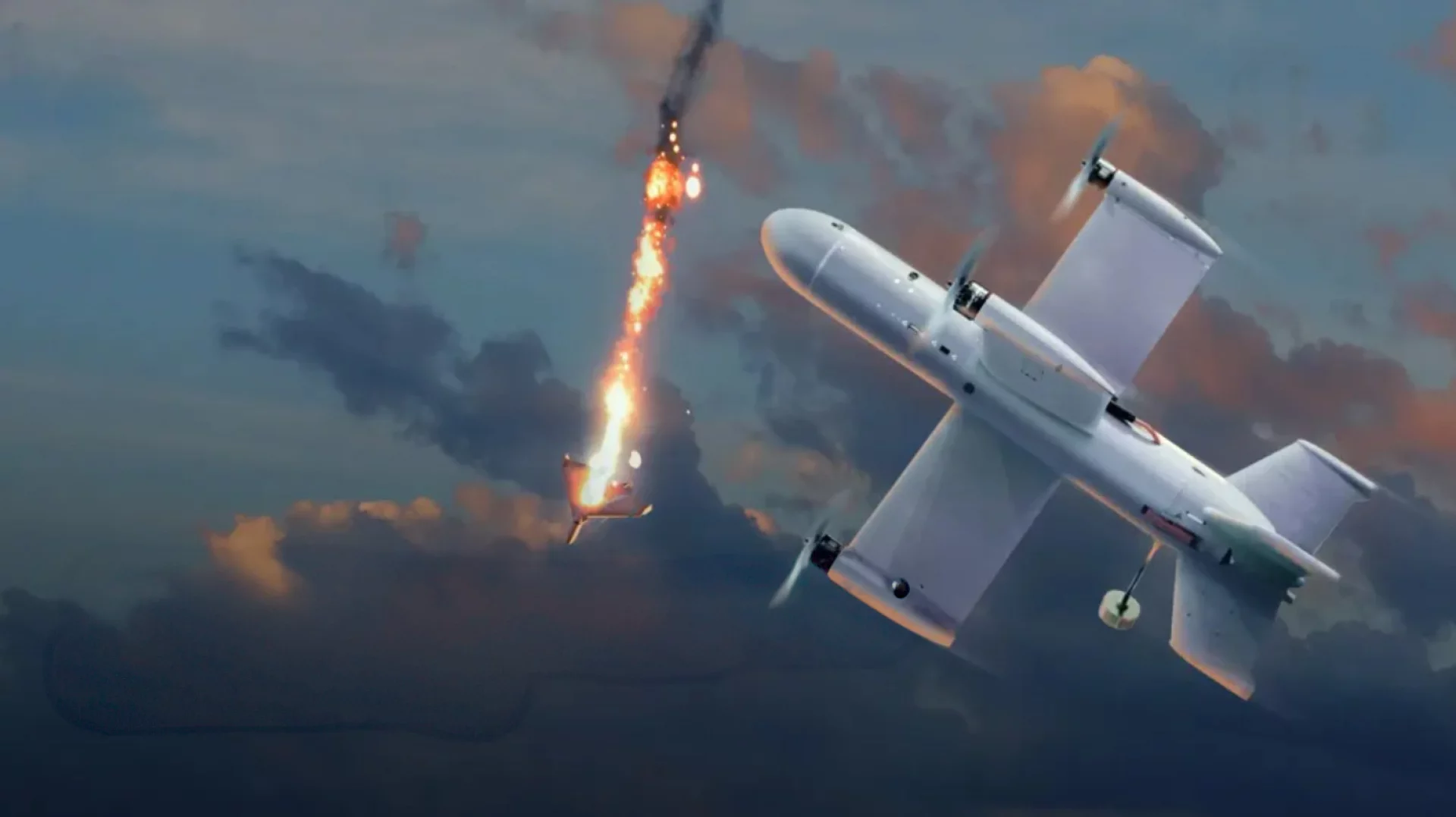
The massive introduction of drones truly disrupted the battlefield: both sides quickly and fully embraced various military and civilian-modified drones for reconnaissance, fire adjustment, and precision strikes. The battlefield became a “drone laboratory,” constantly producing new tactics, equipment, and countermeasures, providing a real-world example for armies and policymakers around the world to follow and learn from. This trend not only changed the operational style of the Ukrainian battlefield but also triggered a chain reaction in other hotspots, such as conflicts involving Iran.
In the field of counter-drone technology, Ukraine has risen to the forefront globally, becoming a key exporter of technology and experience. As of 2025, the global counter-drone market is estimated at around $3.11 billion, with North America accounting for approximately 45.2% of revenue. Although Ukraine’s investment accounts for only about 5% to 8% of global spending, its effective interception rate and battlefield deployment density are far higher than indicated by the figures, due to lower domestic production costs and widespread reliance on decentralized, low-cost electronic warfare systems.
Ukraine is transitioning from a recipient of aid to a supplier of counter-drone technology and operational plans, and is particularly valued in the Middle Eastern market. However, wartime export controls still limit its ability to conduct large-scale direct commercial exports. The Kyiv School of Economics estimates that Ukraine’s potential scale could reach $6.9 trillion over a decade of broader recovery and defense industrial development, which means that counter-drone and drone systems are likely to become one of the country’s long-term industrial pillars.
According to President Zelenskyy’s public statements, Ukraine has provided hardware and over 200 counter-drone experts to countries such as Saudi Arabia, the United Arab Emirates, Qatar, Kuwait, and Jordan. The primary mission of these experts is to fill the gap left by expensive Western air defense systems like “Patriot” when dealing with swarms of low-cost drones, building a “economically sustainable” defense chain at a cost far lower than traditional air defense missiles. Ukrainian teams also provide advice to local militaries on radar deployment, signal intelligence (SIGINT), and coordinated command of “mobile firepower groups,” helping them intercept incoming drones with mobile firepower units under low-cost conditions.
In Europe, Ukraine is engaged in direct hardware sales and is also assisting in integrating its “operational logic” accumulated on the battlefield into NATO air defense systems. Publicly mentioned partners include Lithuania, Poland, Germany, the United Kingdom, Italy, the Netherlands, Latvia, and Denmark, while Nigeria and Colombia have also been listed as users or potential customers. Notably, the United States has deployed Ukraine’s Sky Map system at Prince Sultan Air Base in Saudi Arabia to protect U.S. assets and train U.S. personnel, demonstrating increasing confidence in Ukrainian solutions within the allied system.
Ukraine’s role in the Middle East is partly driven by conflicts involving Iran, but due to the alliance between Iran and Russia, Ukraine deliberately maintains “distance” from the conflict in Iran itself. Zelenskyy emphasized in a speech after the Ukrainian Volunteer Day awards ceremony that Ukraine “has no plans to send ground troops to Iran,” and the only personnel sent are counter-drone defense experts who will help strategic partners defend against attacks by the “Shahed” series of drones.
In terms of specific equipment and services, Ukraine’s supply list is quite diverse, and would likely be even longer without wartime export restrictions. After years of combat testing, Ukraine has made significant progress in electronic warfare, interceptor systems, and drone threat analysis and countermeasures.
In electronic warfare and detection, the Bukovel-AD developed by Ukrainian company Proximus LLC is a vehicle-mounted multi-frequency jamming system used to early detect and suppress drones. It can detect threats within a range of approximately 70 kilometers and jam data link and GPS signals within a range of approximately 20 kilometers, achieving “soft kill.” In addition, the SF-3 launched by Piranha Tech is a portable “anti-drone gun” that can jam small drones simultaneously on up to three frequencies at a distance of approximately 3 kilometers, suitable for point defense on the front lines.
More ambitious is the aforementioned Sky Map network command and control system, an AI-integrated C2 platform that integrates data from over 10,000 passive acoustic and radio frequency sensors to track low-speed, low-altitude hovering munitions and other targets. It has been deployed in Saudi Arabia, providing defense support to local and U.S. forces. For large-scale incoming attacks of low-cost, small targets from multiple directions, this pattern of high-density sensor networks combined with AI identification is gradually being seen as a key supplement to traditional expensive air defense systems.
In terms of hard-kill interceptors, Ukraine exports the Sting high-speed drone interceptor, specifically designed to counter professional-grade quadcopters and fixed-wing drones. It has a maximum speed of approximately 150 knots (approximately 174 mph, 280 km/h) and an operating altitude of approximately 3000 meters, with a unit cost of only approximately $2,000 to $6,000, emphasizing “using cheap drones to shoot down enemy drones that are more expensive or numerous.” Another variant, the Magura V7, is an unmanned boat platform that can launch aerial interceptors from rails or AI-guided turrets. According to its manufacturer, the boat can intercept “Shahed”-class drones along maritime routes and has been demonstrated to potential customers, with the United States producing it under license.
In addition to hardware exports, Ukraine is also sending instructors and advisors on a large scale. They are responsible for training local “mobile firepower groups” to use high-intensity spotlights, thermal imaging equipment, and heavy machine guns, and integrating them with the sensor data provided by Ukraine to build a low-cost, short-range interception fire network. They also provide advice to partners on patching “technical gaps” in air defense systems, assisting in establishing production lines in Germany and the United Kingdom, and are expected to expand production and assembly capabilities to Saudi Arabia and the United Arab Emirates in the future.
Currently, Ukraine still strictly implements wartime export controls, adopting a “semi-open” model: private companies with surplus capacity can be authorized to export small quantities if they pass security reviews, thereby finding a balance between ensuring wartime needs and earning foreign exchange. From the perspective of innovation, Ukraine has chosen a “non-traditional route” different from traditional defense industrial systems: it does not mass-produce designs that are fully finalized and fully approved, but rather produces, combats, and iterates, constantly revising system designs through battlefield feedback, and entering a rapid practical stage even when products are not yet perfect, significantly shortening the cycle from concept to deployment.
Economically, Ukraine pursues an “economic shield” model: compared to defense industrial powers like the United States, Ukrainian unit profits are not high, but it can provide partner countries with sustainable defense capabilities at lower unit prices and higher output, thereby compensating for the inherent limitations of expensive systems in terms of quantity and usage costs, or acting as a low-cost supplement to high-end systems. This has also enabled Ukraine to gradually form a kind of “survival-type industrial upgrading” through scaled, cost-performance-oriented defense exports under the pressure of wartime economic conditions.
Ukraine’s transformation from a country that once “begged” for weapons to an exporter of advanced counter-drone technology and services is particularly dramatic against the backdrop of a continuing brutal war. But from a historical perspective, such a transformation is not unprecedented: war has repeatedly proven to be a catalyst for technological explosions, from the replacement of cavalry by tanks in World War I, and the rise of aircraft from “toys” to strategic platforms, to the Cold War spurring nuclear energy, radar, antibiotics, computers, satellites, microchips, lunar landings, and global positioning systems. Humanity constantly forces technological leaps forward in disaster. The cost, however, is equally enormous—as stated at the end of the article, people are still hoping that one day this “ledger of progress bought with immense suffering” will reach some kind of balance.