Internet Speed of 260Mbps: NASA's Artemis II Transmits 484GB of Data from the Moon
NASA successfully completed the Artemis II mission in April, achieving a crewed lunar orbit for the first time in decades. The communication technology used was significantly advanced, transmitting 484GB of data. With the Moon 380,000 kilometers from Earth, a robust communication system is crucial, and NASA utilized a laser communication system called O2O, developed over more than ten years, which set a record for Earth-Moon communication speed in 2013.
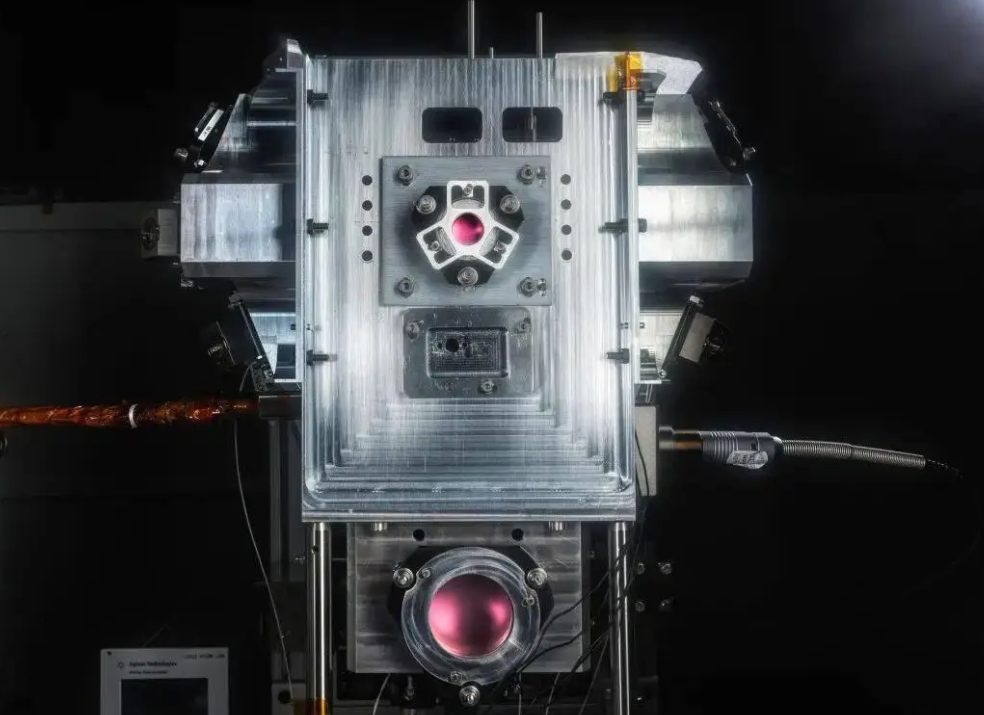
The O2O system weighs only 30.7 kilograms but offers a significantly improved internet speed compared to previous Earth-Moon communication systems. It boasts a nominal downlink rate of 80Mbps, with a peak rate of 260Mbps, and an uplink speed of 20Mbps, comparable to many American households' wired broadband.
By comparison, the communication system used by the Apollo spacecraft over 50 years ago had a rate of only 51.2KB/s. The current O2O communication system represents a 5000-fold improvement, a completely different magnitude.
Considering the ultra-long distance between the Earth and the Moon, the two-way video call latency of the O2O system is approximately 1 second. This is certainly higher than the latency of currently used wired or wireless networks, but it is still acceptable and does not render communication impossible.
At this internet speed, 36GB to 117GB of data can be transmitted in one hour. However, continuous data transmission is not realistic. Dailygalaxy reports that during the approximately 10-day journey, the O2O system transmitted a total of 484GB of data, roughly equivalent to 100 high-definition movies.
The data recorded by Artemis II is expected to provide important support for research on the Moon and space travel, and NASA should release more images and videos in the future.
The successful validation of this O2O laser communication system also lays the foundation for future interstellar communication, allowing for a unified system from Earth to the Moon and beyond to deep space missions.