“The New York Times” Focuses on Chinese AI Short Dramas: $30/Minute Disrupts Film and Television Production Chains
According to a report by The New York Times on May 4th, until recently, producing a popular micro-short drama in China required hiring actors, renting sets, and spending weeks on filming and editing. However, now, some Chinese companies are mass-producing these short dramas at a cost of $30 per minute, without the need for cameras, crews, or real actors.
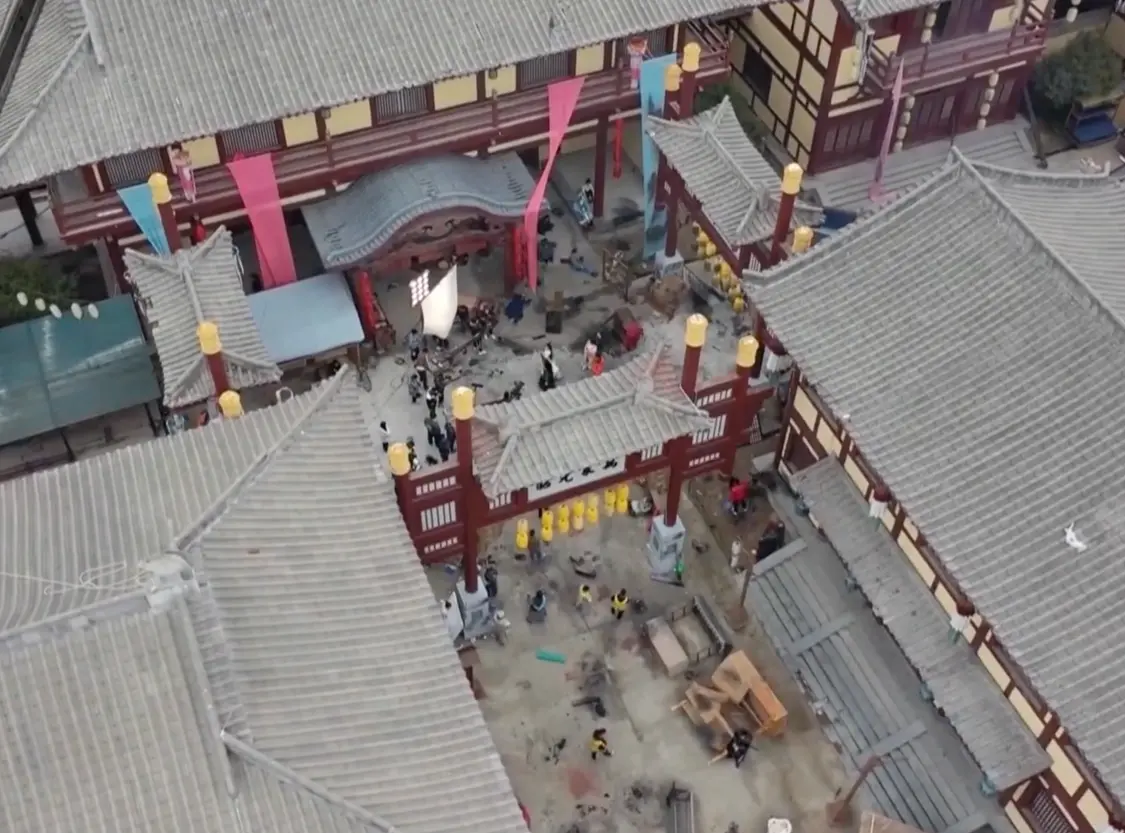
AI Impacts the Entertainment Industry
This is all thanks to AI.
AI-generated micro-short dramas have suddenly become ubiquitous in China: According to Chinese consulting firm DataEye, nearly 50,000 new AI-generated micro-short dramas were uploaded to Douyin (TikTok) in March alone. This single-month upload volume almost matched the platform's total micro-short drama uploads for all of 2025.
This boom is driven by the widespread availability and improving performance of AI video tools, including the Seaweed 2.0 model launched by ByteDance, Douyin’s parent company, in February. Major production companies are testing the capabilities of these models, creating experimental clips covering content ranging from Chinese samurai battles to post-apocalyptic scenes or idyllic countryside rivers.
AI-Generated Works
Most AI-generated micro-short dramas (which, according to Chinese law, must be labeled as AI-generated) don’t receive much attention, but some clips have garnered hundreds of millions of views. This phenomenon is not surprising in a country that is generally more optimistic about AI than the West. According to Chinese official media reports, the Chinese AI micro-short drama market is expected to exceed $3 billion this year, while the entire micro-short drama market is expected to exceed $14 billion.
The New York Times interviewed several professionals in the Chinese entertainment industry to hear how AI is changing their lives.
Actors
Li Jiao’e, 32, is an actor. In 2024, when he came to Hengdian, an important film and television shooting base in eastern China, he had only played minor roles in micro-short dramas. Nevertheless, he was thrilled. After years of doing unrelated work, he had finally embarked on a path to pursue his dream of becoming an actor.
Slowly, he began to land some roles with lines, usually comedies, and was sometimes recognized in public.
But he says that in recent months, acting opportunities have suddenly disappeared. The groups where opportunities were originally shared have become silent.
“There’s nothing anymore,” he said. “It’s like it was raining constantly, and then suddenly the rain stopped.”
He says the decline in opportunities is partly due to a major streaming platform raising its standards for acquiring content, trying to eliminate lower-quality productions. But he believes the AI boom is another reason.
Li Jiao’e says he is not against the use of AI in the entertainment industry, but believes the way it is currently being applied is problematic.
“They are still imitating people, or trying to make AI look more like real people,” he said. “They should try to unleash more imagination and take a more unconventional path.”
He continued, “After all, the fundamental value of humanity lies in imagination.”
Directors
Wang Yushun, 37, is a director. He knows the importance of budget in filmmaking. Before becoming a micro-short drama director, he had shot TV series and independent films, and had seen some projects he had invested months or even years in fall through due to investors changing their minds. He turned to the micro-short drama format (usually only one or two minutes per episode) partly because he wanted to get a quick return.
However, when AI tools first became popular a few years ago, he was skeptical of their quality, even though he could see their potential for saving costs. He says he mainly used AI to create mood boards at the time.
But last summer, he changed his mind. He had an AI tool generate a scene: a horse charging into a trench to rescue a general. The resulting footage was much more detailed than he had even imagined or requested, including the horse knocking down an enemy soldier, the soldier falling, and the general riding away.
“I thought to myself, wow, this technology might really be able to replace some more difficult or costly scenes,” he recalls.
Since then, he has begun to use AI extensively in visual effects production and founded a company that produces both AI-generated and live-action micro-short dramas.
However, Wang Yushun is also worried about the industry’s rapid shift to AI. He has had to lay off some employees who worked on real-world sets due to the sharp decline in demand for live-action content. He says the shift to AI is more of a necessity than a choice.
He hopes to do projects that combine AI with live-action filming. He is preparing a work similar to “Stuart Little,” where an animated mouse performs alongside live actors.
“If we can both feel the warmth of live-action performance and see the power of AI technology, I think that would be great,” he said.
Production Company Founder
Hou Xiaohu, 40, is a founder of a production company. Two years ago, he founded a company that used AI to make videos, when the technology was only capable of producing corporate promotional films. But last year, with the continuous improvement of AI video tools and the explosive growth in demand for micro-short dramas, he shifted his business focus.
Today, Hou Xiaohu has about a dozen employees, some responsible for creative content, similar to traditional screenwriting and directing work, and others responsible for the technical side, generating AI video material. His company focuses primarily on stories with traditional narrative themes, such as legends of sea gods or monks with superpowers.
Hou Xiaohu says some of his creative employees have a background in film and television production, but others are purely “AI enthusiasts.”
“This job isn’t entirely traditional screenwriting; part of it requires translating into a language that AI can understand,” he said. “People without a traditional directing or screenwriting background may actually be better at it.”
Making a 100-minute animated series takes about a month and three employees. Realistic-style productions take about five people because generating sufficiently realistic images requires more work.
Competition in the industry has become more intense in recent months. But Hou Xiaohu predicts that as audiences demand higher quality, many low-cost productions will gradually disappear.
He also says he is not worried about public opposition to AI-generated micro-short dramas. He says that as government regulation strengthens, the misuse of others’ likenesses will be reduced.
Hou Xiaohu points out that people will gradually find ways to adapt to the pain of employment. He himself worked at a large technology company in Beijing, but was later forced to leave due to layoffs, and then turned to AI film and television production.
“There will definitely be an impact on employment,” he said. “But as an individual, what can you do? You can only embrace this new era and find a way to adapt.”