He Once Defeated Musk in Court, Now He's Fighting for Altman
In Elon Musk's high-profile lawsuit against those attempting to dismantle OpenAI, Sam Altman has hired William Savitt, a lawyer who previously defeated Musk in the Twitter acquisition case, as his lead counsel. Savitt, a partner at the top Wall Street firm Wachtell, Lipton, Rosen & Katz, once worked as a taxi driver and a rock band singer and now stands at the pinnacle of U.S. corporate litigation, fighting for Altman and OpenAI in Oakland Federal Court.
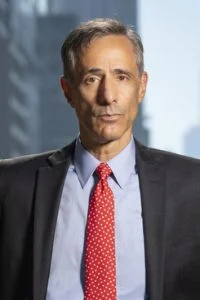
Savitt is a “natural fit” for this case. For decades, he has been on the front lines of corporate litigation, building a top reputation in areas such as mergers and acquisitions, corporate governance, and shareholder disputes. In 2022, when Musk tried to back out of the $44 billion acquisition of Twitter, it was Savitt who represented Twitter in the lawsuit, winning key procedural rulings and forcing Musk to agree to complete the acquisition at the original price on the eve of trial. His firm, Wachtell, also participated in the complex restructuring of OpenAI’s profitable division.
Now, in this trial focusing on two Silicon Valley star entrepreneurs, Savitt serves as Altman and OpenAI’s lead litigator. Musk accuses Altman in court of turning a non-profit research lab initially supported by Musk into a “corporate behemoth,” constituting a “deceptive turn”; Savitt must convince the jury that the true purpose of the lawsuit is for Musk to dismantle OpenAI in order to elevate his own AI company, xAI.
Despite being a leading litigation partner at one of America’s top law firms and having represented well-known clients such as Brad Pitt, Savitt has generally remained low-profile in public. This high-stakes trial surrounding OpenAI has instead become his first real time to stand in the global spotlight. Calm, restrained, and polite are the first impressions observers have of him, making it difficult to connect him to his past as a taxi driver and rock band singer. His resume, before entering Columbia University Law School and serving as a clerk for U.S. Supreme Court Justice Ruth Bader Ginsburg, looks more like that of a “man of letters” than a Wall Street lawyer.
During the trial, his sharpness in court has also left a distinct impression. During a tense cross-examination, when Musk stated he hadn’t carefully read a document regarding OpenAI’s organizational structure, complaining about “nitpicking the details,” Savitt pressed further: “This is a four-page document, correct, Mr. Musk?” He countered subtly, drawing attention from the onlookers.
In fact, Savitt has a long history with both Musk and Altman. For Musk, Wachtell is a “nemesis”: since the 2022 Twitter acquisition battle, the firm has consistently defeated Musk’s team on a series of procedural issues, ultimately forcing him back to the original transaction price. After the deal closed, Musk was furious to discover that Twitter had paid Wachtell $90 million in legal fees, and the Twitter he controlled (now renamed X) sued Wachtell, seeking a refund of some of the fees and accusing the firm of “institutional corruption” on social media. This dispute later went into arbitration and was resolved confidentially.
Cooperation with Altman dates back even earlier. In November 2023, Altman was briefly ousted by the OpenAI board. During this dramatic and fast-paced governance crisis, he quickly hired Wachtell to intervene. Savitt revealed in a pre-trial interview that he had been working with OpenAI on several “still confidential” matters as early as early 2023. Since then, Wachtell’s corporate transactions team has also been involved in OpenAI’s mergers and acquisitions and financing, and has been reported to be assisting with preparations for an initial public offering (IPO).
Wachtell was also at the forefront when OpenAI reorganized its profitable division into a “public benefit corporation,” completing this complex legal restructuring; this is one of the core changes Musk hopes the judge will overturn. At the time, Savitt represented OpenAI in applying for approval from the Attorneys General of California and Delaware, clearing regulatory hurdles for this structural change. “It’s so cool to be involved in something that changes the world,” he said. “It’s very motivating to join a team that’s working to build the best products and also trying to create a better world.”
Before ascending to partner at Wachtell, Savitt’s life trajectory was far from the “standard elite template” of today. From the late 1980s to the early 1990s, he spent most of his time in several rock bands, frequently performing at CBGB, a famous underground rock venue in New York, and touring Philadelphia and Baltimore to make a living, he drove a taxi, fact-checked for National Geographic and Smithsonian magazines, and wrote for obscure business trade publications. “We played a lot of cool venues in New York and did some touring, although we never got a record deal, it was a great time,” he recalls. “I could sit on stage and sing and play my own songs.”
In 1990, unsure of where to go next in life, he took the “classic path” of many young people in their twenties: continuing his education. He entered Columbia University for graduate studies, researching the history of the French jury system, and then entered the law school. After graduating from law school, he served as a clerk for Judge Pierre Leval of the U.S. Court of Appeals for the Second Circuit. Leval praised him as a “very smart lawyer” in an interview, recalling their heated debates over a case involving a maid who sued her employer after falling from a ladder: Savitt supported the employee, while Leval ultimately ruled in favor of the employer. “I don’t remember the details of the case, but I do remember Bill constantly disagreeing with me and occasionally reminding me that I was completely wrong about that ladder case,” Leval joked.
The two still laugh about these events today. Savitt summarizes his professional creed as follows: “If a legal principle or a factual point is being decided in the wrong direction, I will do everything I can, and spend as much time as it takes, to try to turn it around.” After working in Leval’s office, he entered the next stage of his life—entering the office of Justice Ginsburg, serving as a Supreme Court clerk from 1998 to 1999. In his view, the atmosphere of the Supreme Court that year was “relatively mild,” despite significant ideological differences between the justices. He remembers Ginsburg having an “extraordinary ability” to reserve judgment and remain open-minded for a long time; this is a skill he has strived to emulate as a lawyer, as it helps lawyers, like judges, to constantly discover new weaknesses and opportunities as cases and negotiations progress.
With his experience at top law firms and as a Supreme Court clerk, Savitt could practically “choose his position” in the legal world. He wanted to be in New York and at the top of the industry. Even in Manhattan, which is home to elite law firms, Wachtell is considered the pinnacle of the pinnacle. The firm has consistently ranked first in “revenue per lawyer” for many years, with each lawyer generating $5.09 million in revenue last year, almost twice that of the second-ranked firm, while its team size is only about 260 lawyers, far less than the one to two thousand lawyers of other Wall Street giants.
During his more than thirty years at Wachtell, Savitt defended Dell’s privatization deal, fended off attacks by activist investors on Sotheby’s, and represented Wachtell’s clients in numerous mergers and acquisitions and corporate control battles. He is also one of the lawyers representing Brad Pitt in his ongoing dispute with Angelina Jolie over a French winery. One of his specialties is the subtle details of Delaware corporate law—most U.S. publicly traded companies choose to register here, and the Delaware Court of Chancery has become a key stage for complex corporate disputes, handled by specialized judges rather than juries, an institution Musk has repeatedly criticized. Leval commented that Savitt “knows Delaware law inside and out.”
The Governor of Delaware once personally hired Savitt to represent the state government in response to shareholder challenges to a new law regarding corporate transactions. In March of this year, the state’s highest court ruled the new law constitutional, siding with Savitt. Interestingly, he has also been on Musk’s side: in a lawsuit brought by Tesla shareholders, alleging that Tesla overpaid for the acquisition of SolarCity, Savitt represented the Tesla board, including Musk, and the Delaware Court of Chancery ultimately found Musk did not act improperly. Due to confidentiality obligations related to existing and past litigation, he declined to comment on the cases themselves.
Even in the high-pressure world of corporate litigation, Savitt retains his youthful love of music. He keeps several guitars in his office, often strumming while writing briefs, and uses a four-track recorder to create songs in his spare time. “I haven’t given up on the idea of releasing an album,” he says.
In the eyes of many lawyers, the ideal state is to resolve client disputes quietly behind the scenes, avoiding the courtroom spotlight as much as possible. Savitt is also like this, but once a dispute actually reaches the stage of public trial, he clearly enjoys the process. Now, facing Musk, with whom he has both cooperated and been at odds, he is standing on a high-profile courtroom battlefield for the second time—this time, he is defending not just a corporate structure or a deal, but the fate of an artificial intelligence company seen by outsiders as “changing the world” for OpenAI and Sam Altman.