Microsoft Quietly Removes Windows 11 Document Suggesting "32GB of RAM is Ideal for Gaming"
Microsoft recently quietly removed a Windows 11 learning center document that had been publicly available on its official website. The document explicitly recommended 16GB of RAM as a "starting point" for gamers and described 32GB of RAM as a "worry-free upgrade," a statement that previously sparked strong dissatisfaction among players.
The document, titled "Gaming Features: Commonalities of the Best Windows PC Gaming Systems," was deleted shortly after being discovered. The original link has now been redirected to the Windows Learning Center homepage, and the content has also been blocked from web archives.
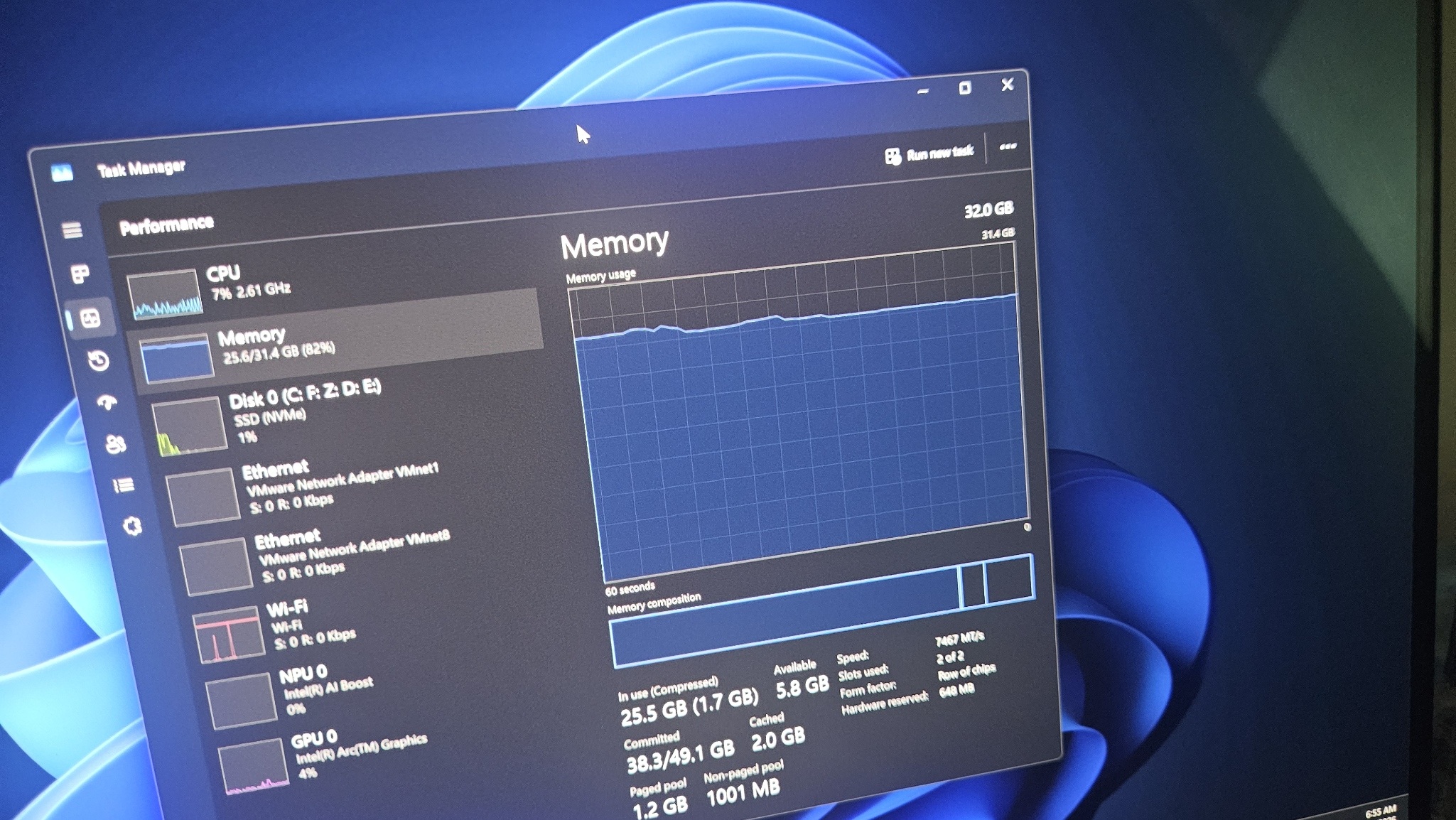
According to the content before it was deleted, Microsoft wrote in the document: “For most players, 16GB of RAM is a practical starting point; upgrading to 32GB of RAM will be helpful when you are running Discord, browsers, or streaming tools simultaneously during gameplay; and additional memory can also provide more headroom for new games as memory requirements continue to increase.” The document even directly referred to "16GB of RAM" as the baseline configuration and defined "32GB of RAM" as a "worry-free upgrade." This statement quickly attracted attention from the media and the player community, sparking controversy on social media platforms. This was particularly true given the high price of memory and the fact that Windows 11 heavily relies on memory-intensive technologies such as Electron and WebView2. Players were particularly sensitive to this "official recommendation."
Even more unacceptable was that this document "recommending 32GB of RAM for gaming" was in clear conflict with Microsoft's current official system requirements. Currently, the minimum RAM requirement listed on Microsoft's official website for Windows 11 is still 4GB, and most mainstream PCs on the market still use 8GB of RAM as the standard configuration. Microsoft's recently promoted Copilot+ PCs, meanwhile, require at least 16GB of RAM as a hardware threshold. In this context, Microsoft's Learning Center suddenly packaging 32GB of RAM as the "ideal choice" for gamers was seen by many observers as accompanying rhetoric aligned with its own Copilot and AI strategy.
Faced with public fermentation, Microsoft chose to quietly withdraw the document. Over the weekend, the relevant page was taken offline, the link jumped to the Learning Center homepage, and Microsoft also took measures to prevent web archive services from continuing to crawl and make the document public. Microsoft has not yet provided a public explanation for the deletion. Windows Latest reported that it has requested a statement from Microsoft, but had not received a response as of press time. However, this is not the first time Microsoft has promoted the idea of "32GB of RAM as the new standard for gaming" on official channels.
In February of this year, another similar article in the same Learning Center encouraged "serious gamers" to choose 32GB of RAM and linked it to the narrative of Copilot+ PCs, emphasizing that the latter was "naturally suited for gaming." This makes it difficult to view the latest 32GB recommendation controversy as an "isolated incident." Prior to this, Windows 11 had already gained a reputation for its large number of Electron and WebView2-based applications consuming memory, and Microsoft CEO Satya Nadella also publicly acknowledged that the company needs to optimize Windows' performance on low-memory devices to regain the confidence of core users in performance.
In this round of controversy, many commentators pointed out that while Microsoft is promoting higher memory requirements and rising market prices through Copilot and AI features, it is also using official content such as the "Learning Center" – which is highly optimized for search rankings – to guide consumers to view 32GB as a "worry-free choice." The underlying profit motive is inevitably thought-provoking. At the same time, Microsoft is also trying to alleviate Windows 11's resource usage problems through technical improvements. The company has previously confirmed that it is developing a series of performance and stability updates for Windows 11, including improving the performance and reliability of File Explorer, in an attempt to compress memory usage at the system level and reduce the pressure on users to upgrade hardware for a smooth experience.