Gravity Series Rockets Expected to Bring Launch Cost Per Kilogram Below 10,000 Yuan
According to CCTV Finance, at the special May Fourth program "New Youth, New Economy - Youth Launchpad," Bu Xiangwei, co-founder of Space East, delivered a special speech. Bu Xiangwei introduced that after the successful first flight of the Gravity-1 carrier rocket, the domestic launch cost per kilogram has been directly reduced from 100,000 yuan to below 50,000 yuan. With the continued advancement of Gravity-2 and Gravity-3, the launch cost per kilogram is expected to further decrease to below 10,000 yuan.
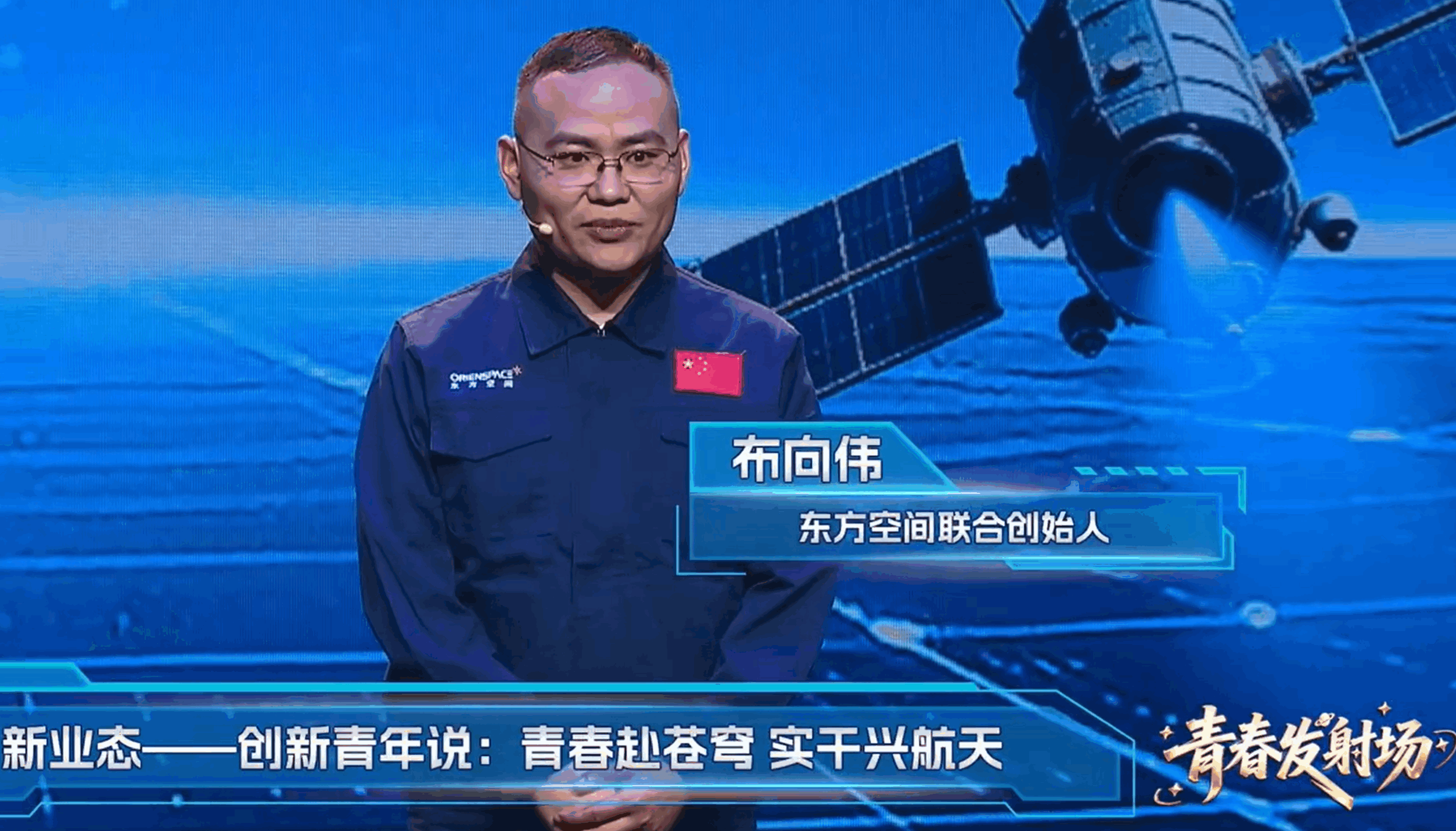
Bu Xiangwei said that Space East has revolved around a core question since its establishment: how to make space launches cheaper, more efficient, and larger in scale? The solution is divided into two steps – improving carrying capacity, and reducing the per-unit payload-to-orbit cost through economies of scale; and significantly reducing costs from the design source and process, with extensive application of standardized, modular, and combined designs.
Under this concept, Space East developed the Gravity-1 medium-to-large carrier rocket. The rocket adopts a semi-configuration of core stage + boosters, successfully completed its first flight in 2024, achieving a carrying capacity of 4.2 tons to a 500-kilometer sun-synchronous orbit, becoming the world's largest all-solid bundled carrier rocket.
Bu Xiangwei revealed that Gravity-1 directly reduced the launch cost per kilogram from 100,000 yuan to below 50,000 yuan, bringing "real benefits" to the market.
Facing the demand for low-orbit internet constellation construction, Space East is developing the Gravity-2 medium-to-large liquid carrier rocket, with a carrying capacity of 15 tons to a 500-kilometer sun-synchronous orbit, more than three times that of Gravity-1.
Bu Xiangwei stated that the per-unit launch cost of Gravity-2 will be reduced to below 30,000 yuan per kilogram, and this figure can be further reduced to 20,000 yuan or even 10,000 yuan per kilogram through multiple reusable technologies in the future.
In addition, the Gravity-3 carrier rocket, which is in the demonstration stage, will have a low-orbit carrying capacity of more than 100 tons, and the launch cost per kilogram is expected to be reduced to below 10,000 yuan, serving future space computing power, constellation infrastructure, and space manufacturing applications.
Bu Xiangwei also shared the details behind the development of Gravity-1. Gravity-1 adopts a world-first configuration, and the three-stage sea launch is also a global first. Before the first flight, the team completed a total of 1452 tests and wrote more than 10,000 pages of reports for risk assessment and control after entering the launch phase. Bu Xiangwei admitted, "There are no shortcuts in aerospace, it all relies on step-by-step progress and overcoming difficulties."
It is understood that Bu Xiangwei graduated from Harbin Institute of Technology with a bachelor's degree in aircraft design, and then furthered his studies and worked in the overall design department of the China Academy of Launch Vehicle Technology.
In his speech, he summarized the relationship between commercial aerospace and the national team as: "The national team is the stabilizer, ensuring safety and tackling cutting-edge technologies. Commercial aerospace is the engine of vitality, competing on cost, speed, and market expansion."