U.S. Army Tests "BRAKER" Drone Bunker Buster – From Concept to Live Fire in Two Weeks
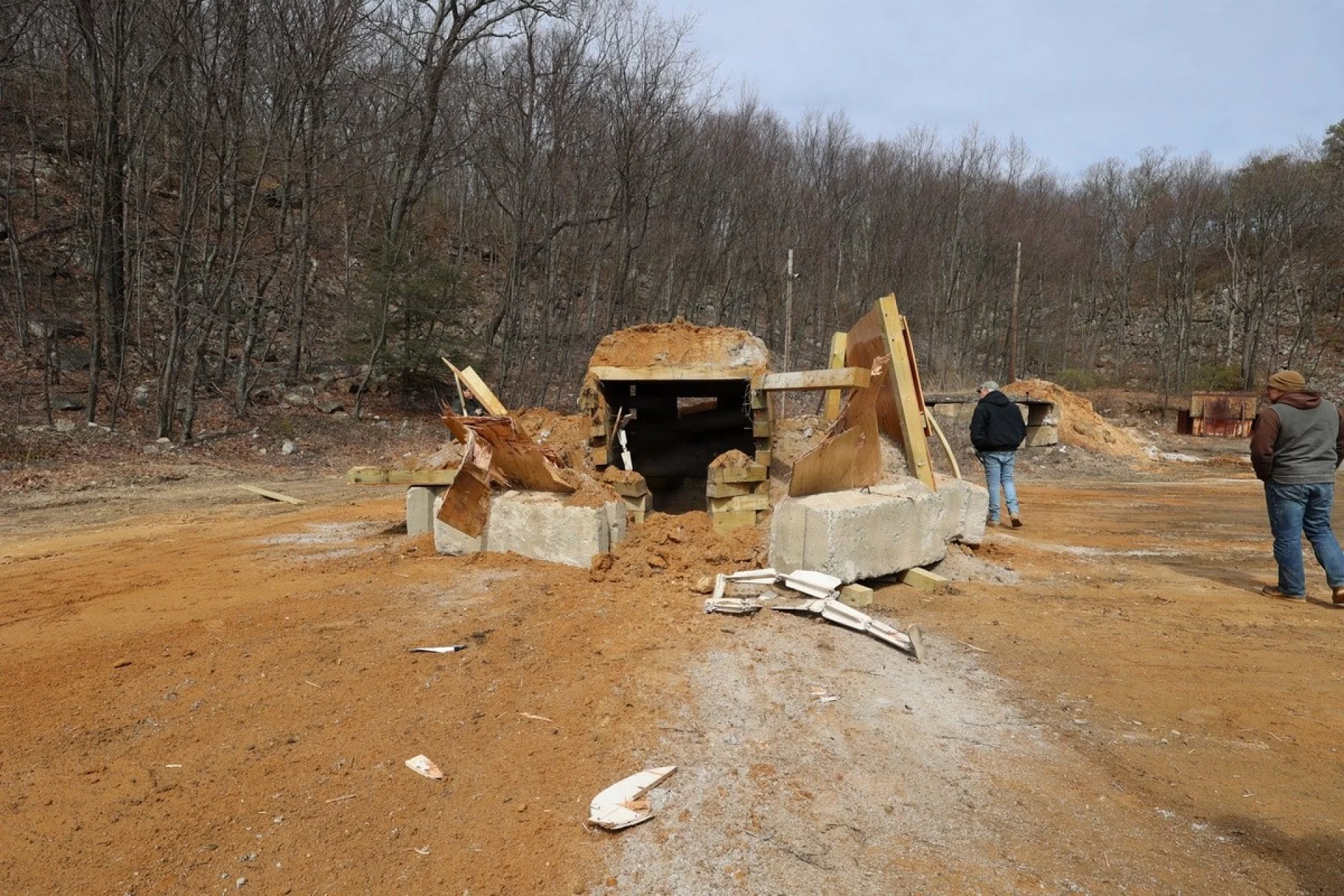
The U.S. Army recently completed a live-fire test of a new "bunker busting" weapon at Redstone Arsenal in Alabama, combining a high-powered bunker-penetrating warhead with a disposable attack drone. This is seen as an important attempt to integrate traditional heavy ordnance with drone warfare tactics.
So-called "bunker busters" are essentially weapons based on the principle of "brute force to break through fortifications," using extremely robust and heavy projectiles that fall or are projected from high altitude at high speed, penetrating several meters or even tens of meters of soil and concrete, and then detonating deep within the target, causing destructive effects similar to a small earthquake. This concept can be traced back to medieval siege catapults, but gained widespread attention in modern times during the 1991 Gulf War, when multinational forces improvised bunker buster rounds by filling surplus 8-inch howitzer gun tubes with high explosives and dropping them from high altitude to destroy Iraqi underground facilities.
The BRAKER tested this time (full name "Bunker Rupture and Kinetic Explosive Round") is the latest generation of this concept, and also highly integrates the rapidly developing drone technology in recent years. The U.S. military emphasized that the BRAKER prototype took only 14 days from concept to completion of live firing, demonstrating the military's new orientation towards rapid weapon iteration and agile research and development.
According to the Army, this high development speed is due to two key technologies: one is the use of additive manufacturing (3D printing) to quickly form the warhead casing; the other is the adoption of a standardized interface called the Picatinny Common Lethality Integration Kit (CLIK), which allows for plug-and-play integration of various munitions with different drone platforms. With this universal interface, the U.S. Army successfully used a drone equipped with a BRAKER warhead to attack and hit a simulated bunker target on March 26th.
In terms of configuration, BRAKER is a lightweight, high-kinetic energy high-explosive warhead mounted on a low-cost, disposable, one-way attack drone, jointly managed by the U.S. Army Research and Engineering Command (DEVCOM) Armaments Center and the "Close Combat Systems Project Management Office" (PM Close Combat Systems). The project aims to create a highly lethal munition payload solution that can be integrated with commercially available drones, combining 3D-printed parts and standardized components with a unified power and signal interface to make the integration between drones and munitions highly modular and fast.
At the tactical level, BRAKER is envisioned as a high-explosive warhead that can be directly "delivered" by a drone, capable of precise strikes along structural weaknesses, openings, or other vulnerable areas of buildings or fortifications, without relying on traditional large carrier aircraft or expensive guided bombs. In other words, it is more like a "kamikaze drone carrying a bunker buster warhead," designed to inflict damage on fortified targets with lower cost and higher flexibility.
However, the U.S. military has not released details about the specific destructive power and working mechanism of BRAKER. Reports indicate that, based on its volume and mass, the warhead likely employs a shaped charge structure similar to anti-tank weapons, using a metal jet to penetrate thick protective structures.
“Our team at Picatinny Arsenal completed the entire process from concept to live fire testing in just two weeks,” said Colonel Vincent Morris, Close Combat Systems Project Manager, in a statement. “BRAKER demonstrates our ability to rapidly develop and safely deliver highly destructive munitions on small unmanned systems platforms. We are building an architecture based on the Picatinny Common Lethality Integration Kit and Small Common Payload Interface to help industry scale this key operational advantage.”
The emergence of BRAKER indicates that the U.S. military is attempting to shift traditional "heavy-handed" bunker busting capabilities to be borne by small, flexible, and mass-consumable drone platforms, thereby seeking a new balance between cost, response speed, and battlefield adaptability.