Severe Shortage of Hard Disk Drives and Solid State Drives, Customers Forced to Sign Five-Year Supply Contracts
In today's computing landscape, hard disk drives (HDDs) and solid state drives (SSDs) have become the hottest commodities, with the expansion of artificial intelligence data centers consuming all available inventory. Seagate, Sandisk, and Western Digital revealed that market demand has become so high that customers are forced to sign long-term supply agreements lasting up to five years.
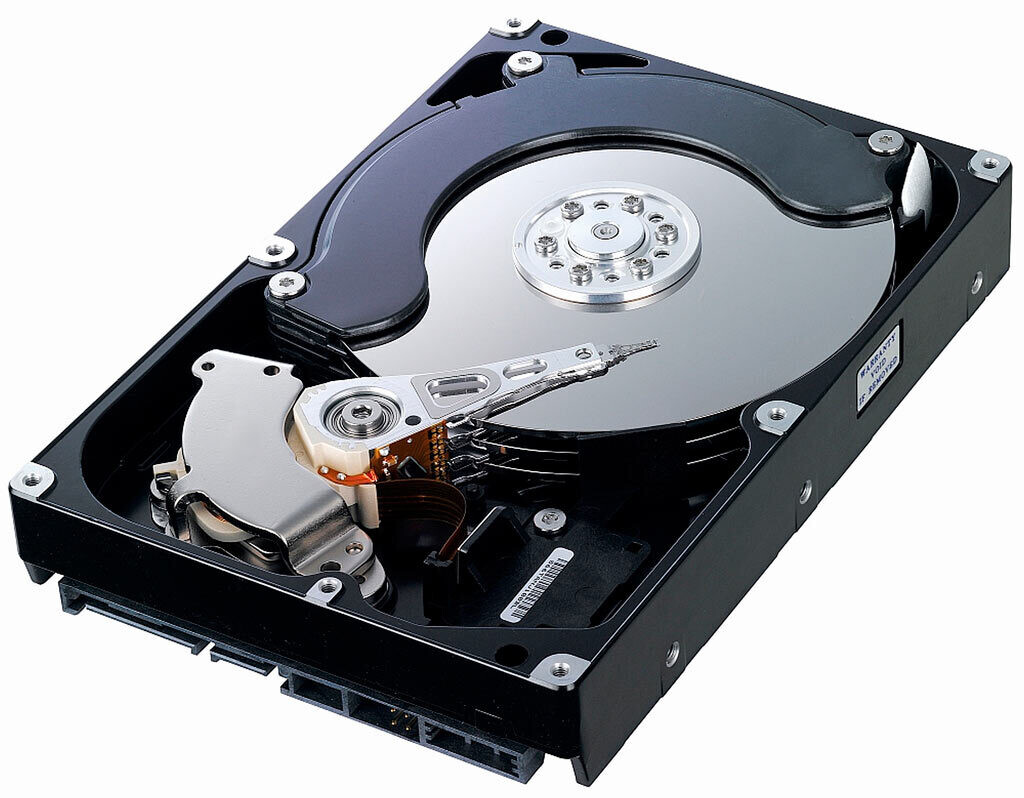
The reason for such a long contract period is that customers are now planning procurement plans around expanding demand, which is not only massive in scale but will also bring better balance to the supply chain. With customers driving stable demand, HDD and SSD manufacturers can accurately grasp how many disk platters or NAND flash chips need to be produced to meet this demand. This is a positive development for the supply chain's capacity expansion adaptation in the long run, but it poses a severe challenge for PC gamers in the short term.
Data from earlier this year shows that HDD prices have soared by an average of 46% since mid-September last year. These changes have made HDDs an expensive commodity, but this is nothing compared to NAND flash chips, whose prices have skyrocketed by 500% in just a few months. The expansion of artificial intelligence data centers has exhausted all remaining inventory of HDDs and SSDs, forcing the consumer PC market to compete for the few remaining products for gaming computers. Interestingly, HDDs contain almost no silicon material for storage purposes, so their significant price increase is a supply chain issue unrelated to the semiconductor industry. Aside from the controllers that use silicon material, HDD platters are made of materials that are currently not in short supply, but high demand still drives up prices.
The main driver of the surge in HDD demand is the large-scale procurement of high-capacity drives by large cloud service providers and hyperscale computing companies in the United States. Concerns about the data retention of SSDs have also led some customers and policymakers to prefer HDDs for certain workloads. Large cloud operators are expanding their EB-level storage to meet the needs of artificial intelligence, analytics, and archiving. Manufacturers report that capacity utilization is approaching full load as demand extends beyond traditional surveillance and backup applications. In particular, artificial intelligence infrastructure requires massive data storage for model training, prompting AI labs to adopt partially HDD-based storage solutions in scenarios where speed is not a priority.