Diverse and Complex Organic Molecules Discovered on Mars, Potentially Indicating a More Habitable Ancient Environment
NASA’s Curiosity rover has revealed a diverse array of organic molecules on the Martian surface through a new chemical experiment – the first such discovery on another planet. These molecules include key components closely related to the origin of life on Earth. This finding suggests that Martian surface materials have the capacity to preserve complex organic matter for extended periods, providing crucial clues for assessing Mars’ past habitability and laying the groundwork for future searches for ancient life traces.
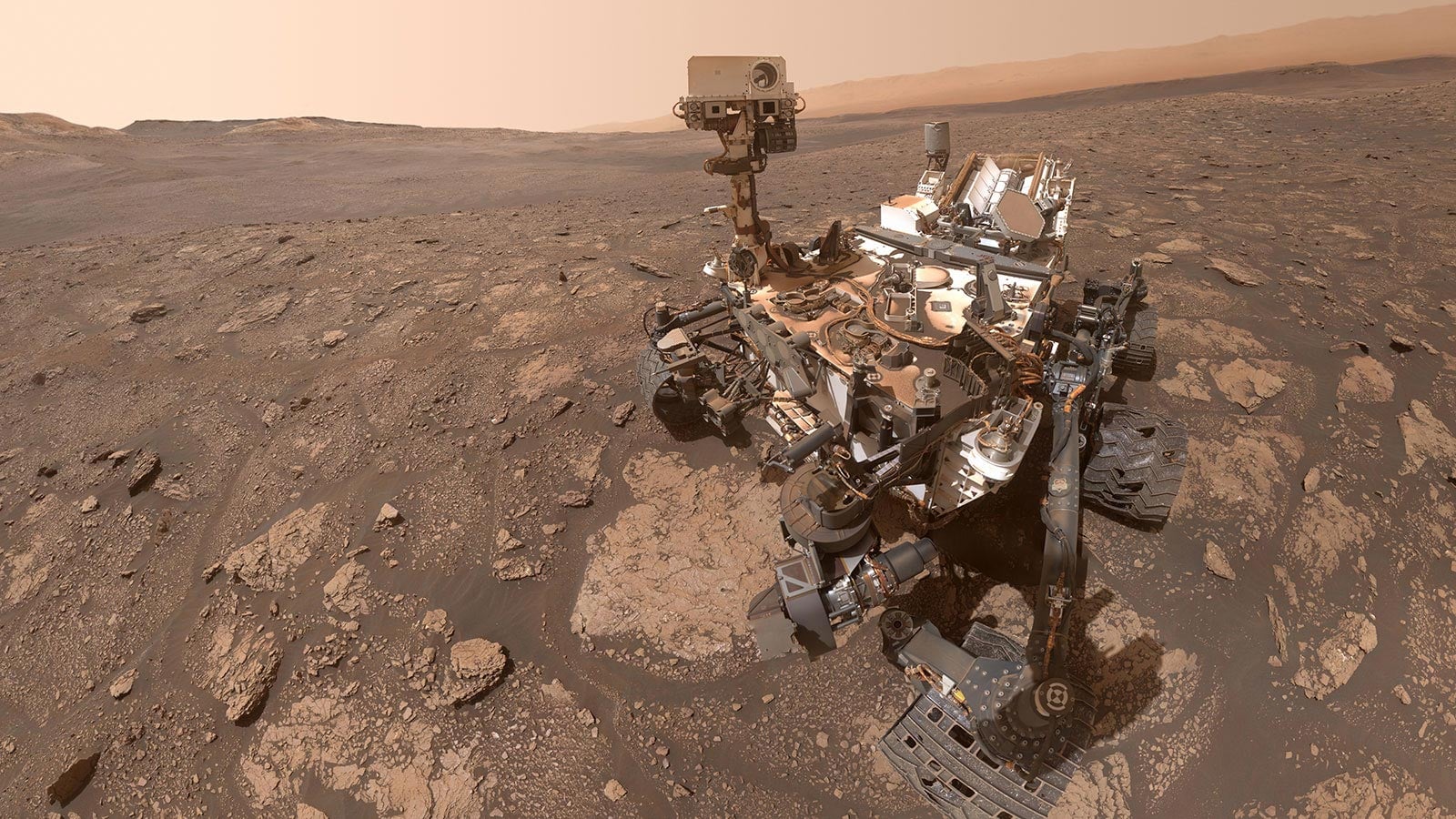
The research was led by Amy Williams, a geology professor at the University of Florida and a member of the science teams for both the Curiosity and Perseverance rovers. She stated that the team believes these detected organic molecules may have been preserved on Mars for approximately 3.5 billion years. “If we hope to find evidence of life preserved in organic carbon on Mars, we first need to confirm whether ancient organic matter could survive for long periods in such an environment, and this result shows that it is possible.” She pointed out that this is particularly crucial for evaluating whether the ancient Martian environment was suitable for microbial survival.
Curiosity landed in Gale Crater in 2012, with a primary scientific goal of determining whether Mars once had an environment capable of supporting microbial life. Perseverance, which arrived on Mars in 2021, focuses more directly on searching for traces of ancient life. The newly announced results pertain to experiments conducted by Curiosity in an area within Gale Crater called “Glen Torridon.” This region is rich in clay minerals formed in aqueous environments, considered the most promising location for capturing and preserving organic molecules.
According to a paper published in *Nature Communications*, the experiment identified more than 20 different chemical substances, including nitrogen-containing organic molecules with structures similar to compounds involved in building molecules like DNA – structures that have never been detected on Mars before. Additionally, the team discovered large sulfur-containing organic molecules such as benzothiophene, a bicyclic compound often delivered to planetary surfaces by meteorites during the early stages of planetary evolution and considered one of the important “building blocks” for life’s precursors.
Williams noted that meteorites landing on Mars and Earth underwent similar enrichment processes in the early solar system. “The materials that fell on Earth and may have provided the starting blocks for life also fell on Mars.” This suggests that, at least at the level of chemical raw materials, Mars and Earth shared some commonalities in their early stages. Researchers emphasize that the current experiment cannot answer whether these organic molecules originated from ancient life, geological processes, or external meteorite input, but it does confirm that the shallow Martian crust has the ability to preserve complex organic molecules.
The work relies on the “Sample Analysis at Mars” (SAM) instrument suite, led by Jennifer Eigenbrode, an astrobiologist at NASA’s Goddard Space Flight Center. Curiosity used a chemical reagent called TMAH in its onboard laboratory to break down large organic molecules in rock samples into smaller fragments for analysis by the SAM instrument. Because Curiosity carries only about two cups of TMAH, the research team had to carefully select the best drilling locations early in the mission to maximize scientific return.
The sample came from rock powder drilled by Curiosity at a location called “Mary Anning,” named after the 19th-century British paleontologist Mary Anning. This site is considered one of the most representative records of ancient lacustrine (lake) deposits in Gale Crater. Previous geological and mineralogical surveys have shown that liquid water was present here for a sustained period, and the sediments are rich in clay minerals, providing a “natural safe” for capturing and sealing organic molecules. The latest experimental results further confirm that these clay-rich areas are most likely to preserve important chemical and even biological stories that may have occurred on Mars.
The research team emphasized that although the discovered organic molecules are very close to certain key components of life on Earth, current onboard analytical capabilities cannot provide a definitive conclusion as to whether they were produced by biological processes. Confirming true “biosignatures” still requires bringing Martian rock samples back to Earth for comprehensive identification at multiple levels – including isotope, molecular structure, and microscopic morphology – under more complex and refined experimental conditions. This aligns with the current “Mars Sample Return” concept: orbiters and ascent rockets will attempt to send samples cached by Curiosity and Perseverance back to Earth laboratories in future missions.
The success of this TMAH experiment not only reshapes the scientific community’s understanding of the preservation capabilities of the shallow Martian environment but also directly influences the design of experimental schemes for future deep space missions. The article points out that the European Rosalind Franklin rover mission and the Dragonfly mission to Saturn’s moon Titan are expected to adopt similar chemical cleavage and analysis techniques to systematically search for complex organic matter on more celestial bodies. In Williams’ view, “We now know that there is a large amount of complex organic matter preserved in the shallow subsurface of Mars, which provides a very encouraging prospect for finding larger organic molecules that could directly indicate the presence of life in the future.”
Although the fundamental question of whether Mars once harbored life remains unanswered, Curiosity’s discovery proves that the ancient Martian environment possessed abundant organic chemical resources, and these resources could be locked in rocks and clay minerals over geological timescales. As subsequent rovers continue to drill samples in Gale Crater and other target areas, combined with Perseverance’s exploration of delta sediments in Jezero Crater, humanity is expected to provide much clearer answers to Mars’ “possibility of life” in the coming decades.