U.S. Navy Tests LOCUST Laser Weapon on Bush Aircraft Carrier, Achieving 100% Drone Interception Rate
The U.S. Navy recently completed sea trials of the LOCUST laser weapon system, developed by AeroVironment, aboard the nuclear-powered aircraft carrier "George H.W. Bush" (CVN-77). The system achieved a 100% interception rate against multiple airborne drone targets, marking a significant milestone in the development of shipboard directed-energy weapons.
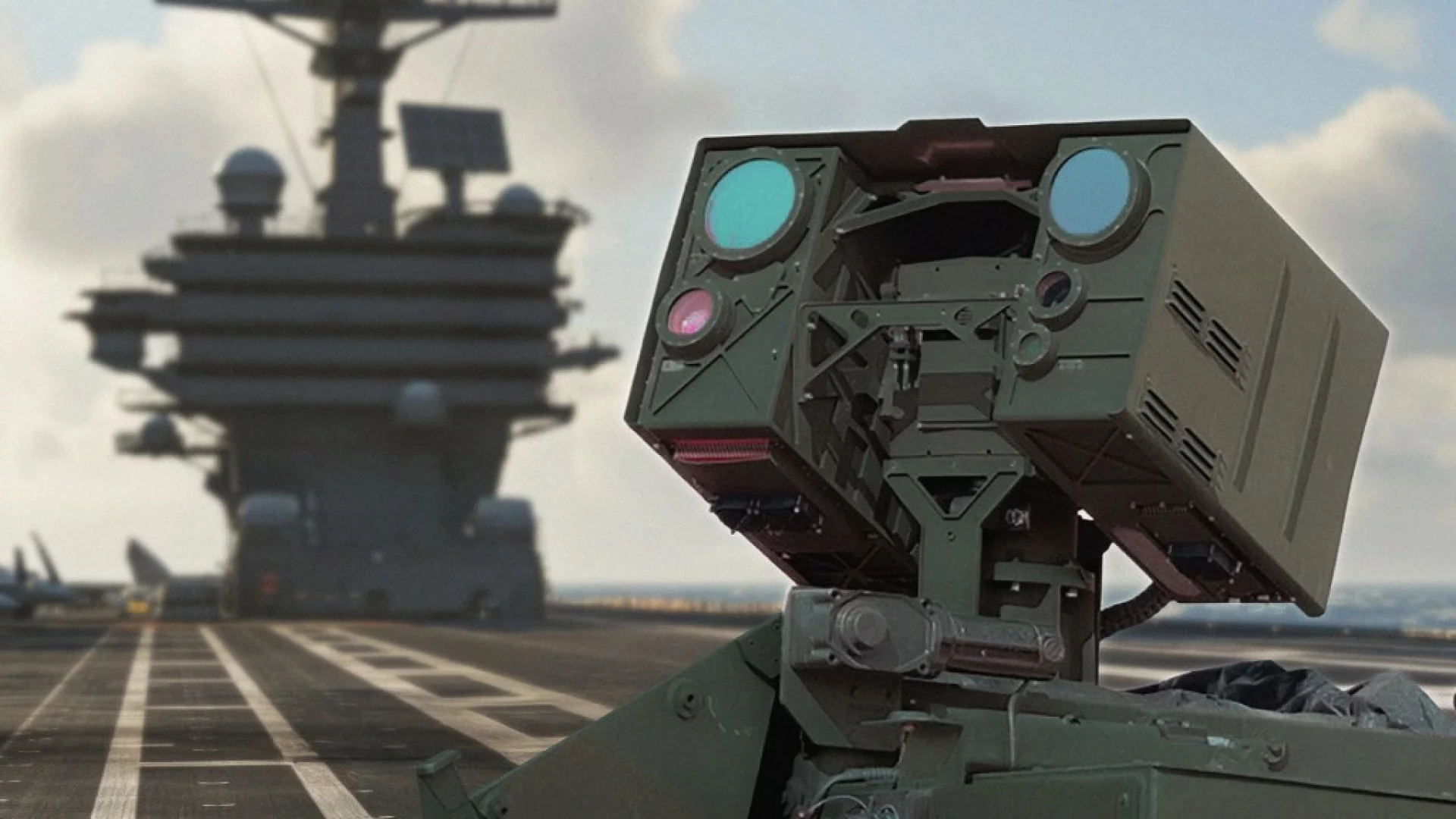
The sea trials of the LOCUST laser weapon were conducted on October 5, 2025, and are considered a key step in the Navy's shift towards laser and other directed-energy weapons. Unlike previous large-scale laser systems with power levels reaching megawatts and fixed installations on the hull, LOCUST takes a "modular" and "mobile" approach. It appears as a "Palletized High Energy Laser" (P-HEL), which can be loaded onto relatively small land-based vehicles or placed directly on ship decks in a container-like manner using a forklift.
LOCUST utilizes Spectral Beam Combining (SBC) technology, delivering an output power exceeding 35 kilowatts. It takes approximately 15 minutes from power-up to combat readiness and can be powered directly by the ship's electrical grid or rely on internal batteries. AeroVironment states that the system is designed for intuitive operation, requiring less than an hour of specialized training for sailors to master the complete process from target detection and tracking to firing.
In terms of combat capability, this laser weapon, weighing approximately 3400 pounds (about 1,542 kilograms), can counter Class 1 to 3 Unmanned Aircraft Systems (UAS) and Unmanned Surface Vessels (USV), making it suitable for low, slow, and small threats from multiple directions. Due to the system's palletized modular structure, it can be quickly removed from the deck when no longer needed, freeing up space for conventional flight operations. During the recent "Bush" carrier test, LOCUST was deployed temporarily, completing the demonstration and then quickly dismantled.
This quick loading and unloading capability means that even when the carrier is docked in port or in restricted waters where flight operations cannot be conducted, the ship can still gain effective drone protection by deploying LOCUST, and the system can be quickly removed before resuming flight missions, maintaining the carrier's full takeoff and landing capabilities.
The most noteworthy result of the sea trials was LOCUST's successful detection, tracking, and destruction of all incoming drone targets, achieving a 100% hit rate. Stabilizing and destroying high-speed, small airborne targets with a laser weapon in a maritime environment is inherently challenging, and this performance is considered extremely difficult for any weapon system.
In addition to combat performance, the trials on the "Bush" also verified LOCUST's reliability under a variety of harsh maritime environmental conditions. Testing included the endurance of electronic equipment in salt spray, humidity, and vibration, the platform stabilization system's ability to compensate for ship sway, and the effectiveness of the system's protective design in ensuring rapid deployment and removal. The trials also assessed its high-precision aiming and strike capabilities to minimize collateral damage and avoid interference with friendly aircraft during operational use.
John Garrity, Vice President of Directed Energy Systems at AeroVironment, stated that LOCUST can "provide effective protection against emerging drone threats to all domains at the speed of light, deployable on any platform, any domain, for any mission." He emphasized that deploying LOCUST in a "palletized" format and quickly putting it into operation could promote the wider application of high-energy lasers in the fleet without expensive and time-consuming structural modifications to ships, calling it a "game changer" for the Navy and national security.
It is reported that this sea trial is a key milestone in AeroVironment's collaboration with the U.S. Navy to advance the LOCUST project. The company believes that LOCUST's modularity, transportability, high automation, and relatively low operating costs will provide ships with a new "unlimited ammunition" defense option to counter the growing threat of drones and unmanned boats.