Agents, Reverse Engineering, National Effort: How the Soviet Union Exhausted All Means to Make Chips – Where Did It Fail?
Recently, I saw a report that Russia has incorporated a 350nm lithography machine into its national industrial system. This equipment, jointly developed by Russia's ZNTC and Belarus's Planar, is capable of producing 90nm chips. After looking at some materials, I discovered that this lithography machine is actually a technological legacy left by the Soviet Union 30 years ago?!
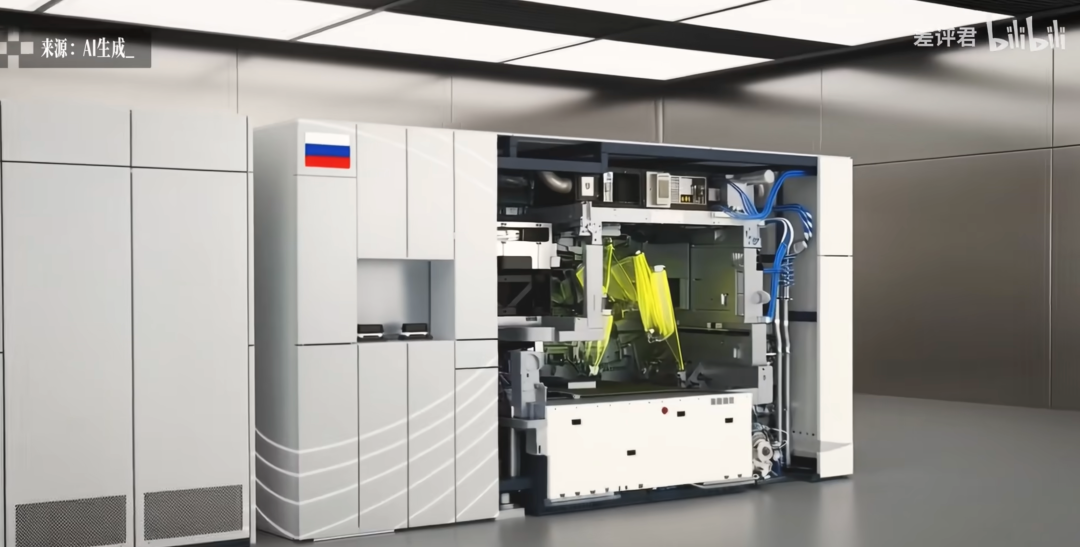
Wait, the Soviet era could make chips and even developed lithography machines? Then why is there almost no trace of it in today's chip world?
Hello everyone, I'm Cha Ping Jun. Today, let's talk about how Soviet chips disappeared?
On May 4, 1962, Khrushchev walked into a laboratory in Leningrad.
Welcoming him here wasn't a parade, nor missiles.
But a seemingly unremarkable machine and two engineers from the United States.
As the demonstration began, the engineers started the machine, and after a series of operations, the machine slowly printed a name on the paper: "Nikita Khrushchev."
For a leader like Khrushchev, who had seen and experienced everything, the computer itself wasn't anything new.
But this iron box, only the size of a filing cabinet, was clearly not the same dimension as the computers he knew, which were covered in wires and occupied dozens of square meters.
Subsequently, one of the engineers took out a radio the size of a wallet, much smaller than mainstream products at the time.
He didn't explain, but directly put headphones into Khrushchev's ears.
As the radio broadcast began, Khrushchev was overjoyed, listening intently and constantly asking questions.
Seeing Khrushchev captivated by the "Yanguo Map" (likely referring to the radio), Shokin, the Deputy Chairman of the Soviet State Radio and Electronics Committee accompanying the visit, finally presented the main course of the performance. He handed over a plan: to concentrate researchers, engineers, factories, and equipment to build a "Chip City."
In fact, this demonstration was a carefully designed trap for this purpose. His goal was to convince the Soviet leadership to promote the new technology brought by the two American engineers – integrated circuits.
Through integrated circuits, engineers could directly etch multiple transistors onto the same silicon wafer, reducing the size of electronic products by several times.
Shokin, who oversaw the electronics industry, noticed the potential of this technology and told Khrushchev that once integrated circuits were widely used, televisions could be made as small as a cigarette pack in the near future, let alone radios.
From the results, this pitch was clearly very successful.
Shortly after, with Khruchev’s personal promotion, Zelenograd, later known as the "Silicon Valley of the Soviet Union," rose from the ground 25 kilometers from the Kremlin.
And in a few years, a large number of factories, research institutes, and residential areas capable of accommodating tens of thousands of people were established in various fields such as materials, design, and manufacturing, along with supporting schools, libraries, and hospitals.
To support the R&D in Zelenograd, the Soviet Union also established a collaborative industry in Ukraine, Latvia, Belarus, and Kazakhstan.
According to recollections of those who experienced it at the time, when Zelenograd was first established, there was almost no systematic technical literature, only a few photos of IBM chips.
But with the full support of the principal himself, Zelenograd quickly concentrated national resources and started from scratch, step by step solving the problems of design, materials, processes, and equipment.
Just two years later, it launched the thin-film integrated circuit "Irtysh," as well as the thick-film "Posol" (Ambassador) and "Troinka" (Path).
Among them, "Irtysh" was used in a miniature radio called "Micro," which was only the size of a matchbox and weighed only 27g.
And it became a hit at the Radio Engineers Conference held in the United States.
It was even touted by Western media as a typical case of Soviet technological surpassing, repeatedly appearing in "loss of learning" reports.
Khrushchev, who was pleased, even presented "Micro" as a national gift to many heads of state, including Egyptian President Nasser and Queen Elizabeth of England.
And "Troinka" went on to a grander stage, becoming a core component of the computer "Argon" specifically designed for the space environment.
And in 1969, it was sent into space with the "Luna" probe, completing the first lunar orbit in human history.
By the 1970s, the "Su Gong Mei Shou" (Soviet Attack, American Defense) era, this technological frenzy brought about by Zelenograd reached its peak.
According to the Soviets themselves, by the end of the 1970s, the technological gap between the United States and the Soviet Union in chip technology had narrowed from eight years to two years, and they could even compete in some areas.
And Motorola engineers, after seeing samples of Soviet chips, were even amazed that their performance level had surpassed American products.
But the question is, if this script continued, with a complete industrial chain and once "surpassing the US and catching up with the US," why did the Soviet chip industry almost disappear, and Russia, which inherited its legacy, still can't produce decent chips today?
In fact, if we shift the lens from the Soviet Union to the other pole of the Cold War, the United States, we will hear another version of the Zelenograd story.
In 1963, Anatoly Trutko, a Soviet semiconductor engineer, moved into a dorm room in the Krooser Memorial Hall at Stanford University as an exchange student.
As one of the few Soviets able to enter American universities during the Cold War, Anatoly devoted almost all his time to studying.
In the eyes of his classmates, his life was no different from other students, just attending classes, sleeping, and doing experiments.
If there was anything special, it was that he liked to attend lectures.
Especially lectures related to semiconductors, he never missed a single one.
Once, after a lecture by Nobel laureate William Shockley, he took out a textbook edited by Shockley, "Electrons and Holes in Semiconductors," and asked him to sign it.
Shockley complained verbally that the Soviet Union had pirated the book, translated it into Russian, and didn't pay for it, but he still wrote a sentence for this rare Soviet fan: "To Anatoly, a friend from the Soviet Union."
But he probably didn't know that this "Soviet friend" had another identity in the Lubyanka archives: a KGB Directorate T agent.
The so-called Directorate T was a special department established by the KGB to circumvent Western technological blockades. Unlike colleagues who were involved in bloodshed, the main task of Directorate T was to collect cutting-edge scientific and technological intelligence from abroad, especially from the United States.
These agents brought back dozens of chips, including Intel, Motorola, and Texas Instruments, to the Soviet Union. They even obtained IBM's complete design drawings and operating system source code.
According to Vladimir Kryuchkov, the last chairman of the KGB, these agents brought at least tens of billions of dollars worth of technological intelligence to the Soviet Union from the 1970s to the collapse of the Soviet Union.
Through Directorate T, the latest chips and technologies from the United States and Europe were continuously sent to the Soviet Union and distributed to various research institutes and factories for reverse engineering.
And Zelenograd was the largest "reverse engineering center" among them.
In other words, the rise of Soviet Silicon Valley was actually taking "copying" to the extreme.
Although "Troinka" and "Posol" were indeed original products of Zelenograd, for chips with a Zelenograd registration, the more common situation was to have some American blood.
A CIA report from 1989 showed that at least one-third to half of the known Soviet chips were "pirated" versions of chips from American companies such as Intel, Motorola, and others.
Of course, for Zelenograd, this was also a helpless measure.
Before the emergence of integrated circuits, the Soviet Union had always bet on vacuum tubes instead of transistors on the electronic technology route.
In their view, future wars would involve throwing nuclear bombs at each other.
Although transistors are small in size, they are likely to crash once they encounter electromagnetic pulse interference from a nuclear explosion.
In contrast, vacuum tubes, although larger in size but simple in structure and durable, are more trustworthy.
However, the emergence of integrated circuits gave transistors an "infinite shrinking key."
When hundreds or thousands of transistors could be etched into a fingernail-sized silicon wafer, it basically signaled the death of the vacuum tube route.
In 1963, when Zelenograd was established, the West already had a relatively mature integrated circuit industry, while the Soviet Union, which was just starting out, lacked processes, experience, and even decent technical data.
It's like someone running halfway, and you're still in the novice village, without even unlocking the tutorial.
Asking him to start from scratch and "hand-rub" the entire industrial chain is not catching up, but restarting the human technology tree.
Rather than saying that the Soviet Union chose to "copy," it's more accurate to say that copying was the only thing they could do at that time.
But this "efficient" copying strategy, while quickly producing chips, also sowed the seeds of trouble.
First, the copying strategy locked the Soviet chip research onto the tailpipe of American technology.
Agents bring intelligence back to the Soviet Union, and then engineers disassemble, analyze, and reverse engineer, this whole process takes at least a year or two.
No matter how fast the KGB and Zelenograd engineers are, they can't be faster than the Americans themselves.
When the engineers in Zelenograd were still trying to understand the previous generation of products, the United States might already be researching the next generation.
As chips become more and more complex, this time difference will only get bigger and bigger.
Moreover, even if they copied, the Soviet Union didn't really understand what they were copying.
In certain specific scenarios, the Soviet Union could indeed achieve a level of craftsmanship close to that of the United States.
But the problem is, this is the upper limit of production capacity, not the lower limit.
According to a CIA report, although the Soviet Union achieved full-load production of 64K memory in 1984, the device yield was still far below 10%, while the general yield in the United States was between 60% and 70%.
The backward production process kept the Soviet Union in a dilemma where it could produce chips but couldn't mass-produce them.
According to this calculation, the gap in chip manufacturing capabilities between the United States and the Soviet Union did not narrow, but widened.
In 1990, the annual output of computers in the United States had already stabilized at millions of units, while the annual production capacity of the Kursk factory, one of the largest computer production bases in the Soviet Union, was only 3,500 units.
It couldn't even meet the needs of the military, let alone scientific research and civilian use.
This was because the Soviet microelectronics system was designed to serve the military from the beginning.
For companies, chips need to be sold for money.
Cost, yield, stability, every item is a matter of life and death.
But for the military, variability is unacceptable.
Originality means long cycles and the risk of failure, which is less stable and efficient than copying.
A chip, as long as it can complete the task, is qualified. It doesn't matter whether it is self-researched, or "borrowed," whether the yield is 90% or 10%. Even copying a chip is faster and more effective than making one.
Producing more chips and picking out qualified ones is more certain and better meets the requirements of the client than improving the production process.
After Khrushchev, the biggest supporter of Zelenograd, was overthrown in a coup, the impatient military directly killed almost all original research. Forcing Zelenograd to invest all its production capacity in replicating American chips.
Zelenograd's mission was completely changed from catching up with American technology to mass-replicating chips identical to American ones.
But imitation and independent production are not the same thing.
Disassembling a chip and "tracing" each layer of the circuit is completely different from going through the entire process.
Many key skills, such as EDA software, yield control, and engineering management, cannot be obtained by copying.
Thus, the Soviet chip industry was always stuck in an awkward position where it could imitate but couldn't develop on its own.
A typical example is the Intel 80286.
Technically, this is not a very complex chip. There are only 130,000 gates in total.
In theory, with the Soviet Union's manufacturing capabilities at the time, it should be able to produce this level of product.
But due to the backwardness of EDA software, Zelenograd engineers could only dissect the original chip layer by layer and "pixel-level replicate" each layer of the circuit structure.
As a result, from the early 1980s to the collapse of the Soviet Union in 1991, this not-so-advanced chip was never truly installed on Soviet computers.
The "military-style" KPIs and reliance on the copying strategy ultimately became the "technical suicide" of the entire Soviet chip industry.
What's worse is that Zelenograd's "success" also continuously absorbed resources from the entire Soviet microelectronics system like a black hole.
In that era, almost all engineers in the Soviet Union knew one thing – if you want better equipment and higher salaries, you have to go to Zelenograd.
So, talents from research institutes across the country flocked to Moscow.
This loss of talent further disrupted the Soviet Union's already limited original research.
The "Pulsar" Institute in Belarus, for example, had made some original breakthroughs in phosphine diffusion technology related to lithography and successfully manufactured samples using this method in Zelenograd.
But as personnel flowed away, the laboratory was merged into Zelenograd, and the related research was soon shelved.
As a result, those truly original technical routes were abandoned one by one; and the path of "benchmarking-copying-mass production" was continuously strengthened.
In the end, the entire system gradually formed an inertia, and no one was willing to bear the cost of innovation.
With the collapse of the Soviet Union, both Russia, Belarus, and other former republics quickly lost the reason to continue investing.
It's not worth it to make it yourself, and it's even less worthwhile to continue copying.
Directly importing chips, even if you buy products of a lagging generation, is better, cheaper, and more useful than making your own.
It wasn't until later, when Russia faced external blockades again, that it had to dig up these almost forgotten technologies.
In my opinion, the Soviet chip industry actually failed in a set of seemingly "correct" choices.
Each choice looks fine on its own. Copying is to catch up; military priority is for survival; concentrating resources is for efficiency.
But when these choices are superimposed, they point to the same result:
A system that is good at copying but unable to create.
It seemed to promise a seemingly good enough future, but never truly believed that it was the master of that future.
Finally, with the disintegration of the red giant, it became a forgotten phrase in the annals of history.