Startup Barocal’s Solid-State Squeezable Refrigerant Could Disrupt Cooling for Refrigerators and Air Conditioners
A startup founded by a materials physicist is attempting to rewrite how we cool food and indoor spaces with a new solid-state cooling material, and has now taken a key step towards commercialization. The company, Barocal, has spent the past seven years developing a solid-state material that can absorb and release heat by applying pressure, aiming to replace traditional refrigerants that leak and damage the ozone layer, exacerbating the greenhouse effect. The material is planned for future application in refrigerator and air conditioning systems.
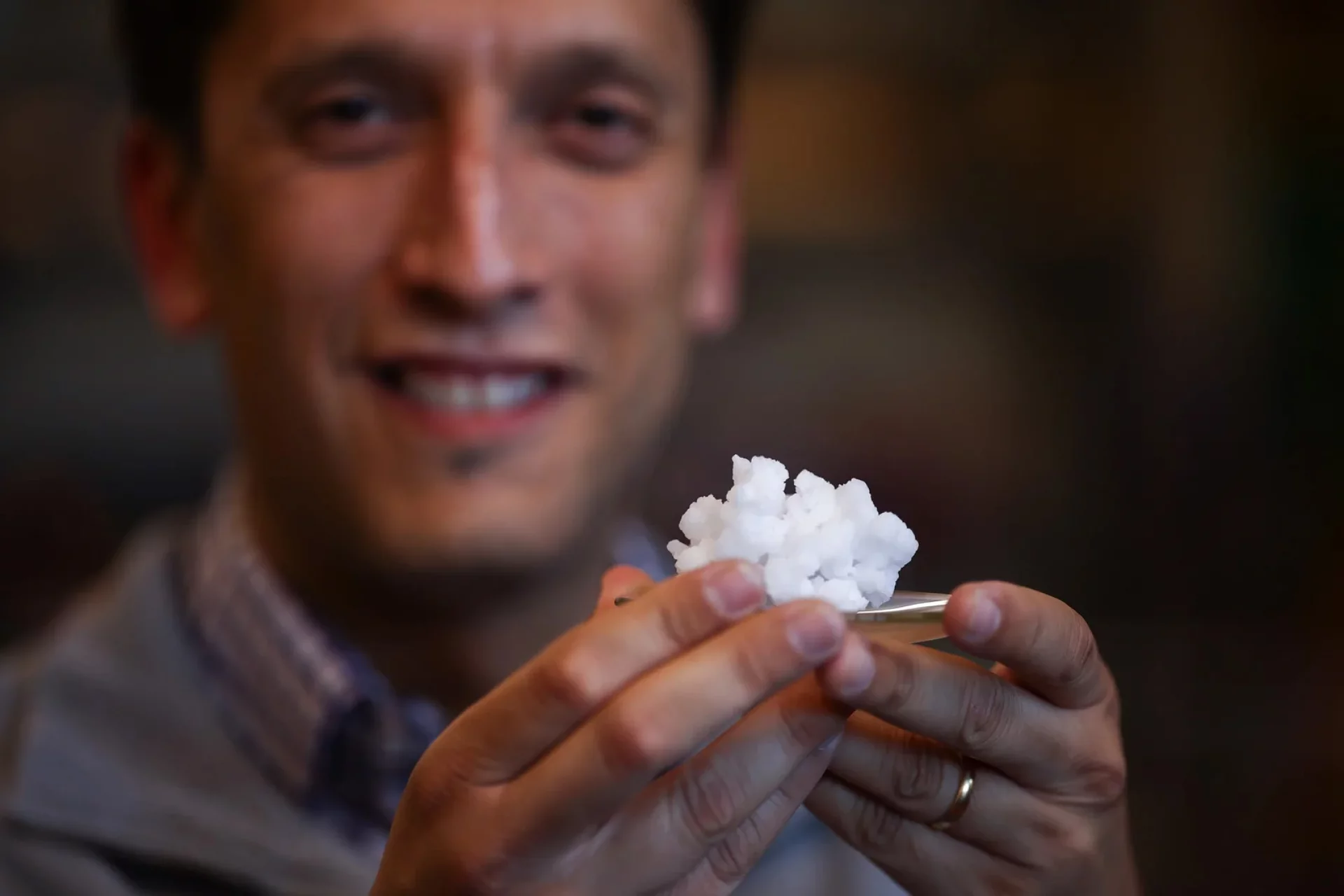
According to reports, the startup was founded by Xavier Moya, a professor of materials physics at the University of Cambridge, and recently completed a new $10 million in funding to advance the commercialization of its solid-state cooling solution. This funding builds on $4.5 million in funding already received from the European Innovation Council and a $1 million prize won in the TERA-Award energy solutions competition, and is expected to significantly accelerate Barocal’s technology landing speed.
To understand Barocal’s approach, it’s important to first review the basic principles of traditional refrigeration systems. Today’s household refrigerators commonly use liquid refrigerants circulating in coils inside the cabinet. These refrigerants are often potent greenhouse gases. When they evaporate into a gas, they absorb heat from the surrounding air and food, thereby cooling the interior space. Subsequently, the gaseous refrigerant is drawn in and compressed by a compressor, during which process the gas is heated. The high-temperature, high-pressure gas then flows through coils on the back of the unit, with a fan helping to dissipate heat to the outside air, gradually cooling and re-condensing the gas into a liquid. After passing through a throttling element to reduce pressure, the liquid refrigerant returns to the evaporator coil, and the entire cycle is continuously repeated to achieve cooling.
Barocal’s innovation lies in the use of a cheap, solid-state cooling material – plastic crystals. In a stationary state, the molecules inside this crystal can rotate freely, at which point the material itself can absorb heat, with its temperature change range stably covering approximately 50 degrees Celsius (90 degrees Fahrenheit). When pressure is applied to the outside, molecular rotation is “paused,” and the crystal releases the heat it previously absorbed. If water is allowed to flow through the material during this process and carry away the heat, and then the heat is dissipated into the environment through a radiator, heat can be “transported” out of the refrigerator or air conditioning system.
This principle is known as the “barocaloric effect,” which is also the origin of the company name Barocal. With this solid-state barocaloric cooling material, refrigeration systems no longer rely on traditional greenhouse gas refrigerants, fundamentally eliminating the significant negative climate impacts of leaks. At the same time, traditional vapor compression refrigeration cycles consume a lot of energy and require a lot of electricity to drive the compressor, while solid-state solutions are expected to significantly improve energy efficiency and reduce the energy required for cooling.
It is worth noting that Moya and his team are not the only ones exploring this direction. Research teams, including several, are trying to use similar principles to develop low-carbon cooling technologies, and the University of Cambridge had been conducting continuous research on related mechanisms for as long as 15 years before Barocal was founded. For example, a research team has proposed a green air conditioning solution based on solid-state refrigerants to replace traditional refrigerant systems.
If Barocal can “land” stably at the engineering and market levels, this solid-state cooling technology is expected to achieve dual emission reductions in the future: on the one hand, reducing the global pressure on electricity demand for cooling, and on the other hand, eliminating the need to use greenhouse gas refrigerants from the source. Given that the global number of refrigerators and air conditioners will continue to increase significantly in the coming decades, this alternative path is highly anticipated for its potential impact on mitigating climate change.
Currently, Barocal is exploring the introduction of its waxy solid-state cooling material into commercial HVAC and refrigeration systems. In addition to the research and development of the material itself, making this “squeezable solid” into a truly usable system requires a lot of engineering work, including achieving system miniaturization, efficiency, cost control, and low noise during operation. The company previously revealed that it has launched pilot collaborations with several international companies, with the goal of launching its first commercial product within three years. If all goes well, consumers may not have to wait long to experience this “future refrigerator” cooling method in their daily lives.